Morning nausea in early pregnancy can feel relentless, especially when it appears before I have even had a chance to get out of bed. When I speak with clients about this stage of pregnancy, I always start with one simple point: nausea is common, but each body responds differently. Reflexology may offer gentle comfort, yet it is not a replacement for medical care, and I never treat it as a fix-all. I use it as one supportive tool among several, especially when someone wants a calm, non-drug approach to easing queasiness.
In my experience, foot reflexology can be soothing because it encourages relaxation, slows the stress response, and gives a person a small moment of control when pregnancy symptoms feel unpredictable. For early pregnancy nausea, I tend to focus on points that people often associate with digestive comfort, diaphragm ease, and general calming. I also pay close attention to when not to use them, because pregnancy calls for caution, softness, and respect for individual history.
Why I use a gentle approach during early pregnancy
Early pregnancy is a time when even a light touch can feel intense. Fatigue, smell sensitivity, and nausea can make a person more reactive than usual. For that reason, I do not use deep pressure or long sessions at the start of pregnancy unless a person has already discussed it with a qualified prenatal practitioner and their midwife or doctor. My preference is to keep everything light, brief, and calming.
Reflexology does not need to be forceful to be useful. In fact, when someone feels sick, I often find that soft, steady work is more effective than strong pressure. I aim to support relaxation, not to “push through” symptoms. That difference matters. A person with morning nausea may feel worse if they are already tense, overheated, or being worked on too firmly.
Foot reflex points I may use for morning nausea
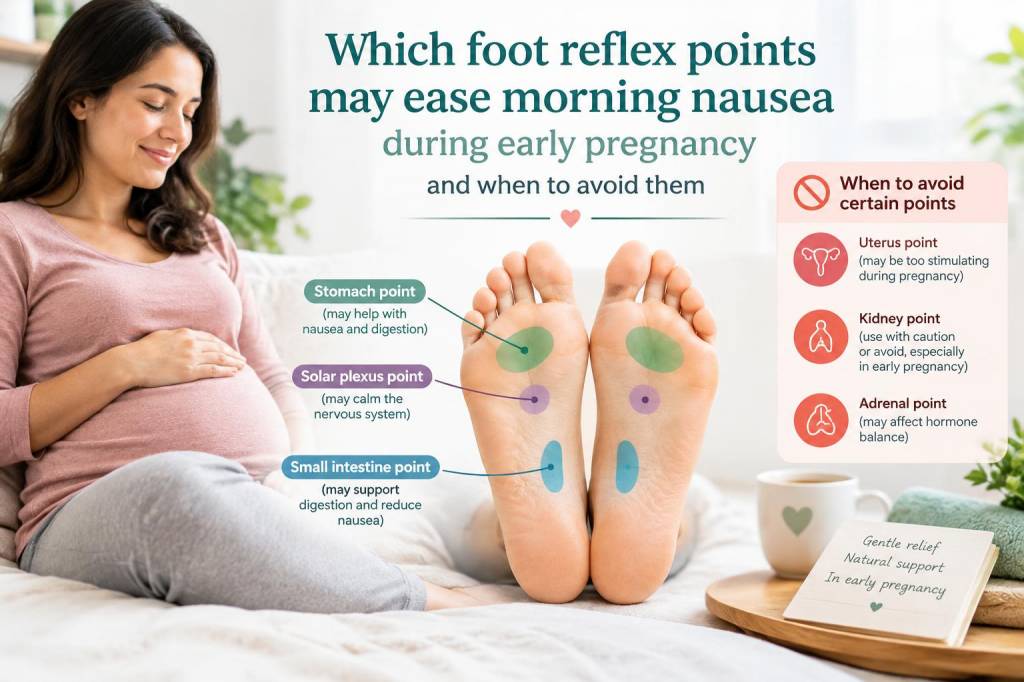
When a client asks me which areas may help with nausea, I usually begin with points that are traditionally linked with digestive comfort and settling the nervous system. I always remind people that reflexology maps are traditional models rather than medical proof, so I treat them as a practical framework for gentle self-care.
- Solar plexus area: This point is often used for calming stress and easing a tight, anxious feeling in the body.
- Diaphragm line: I may use light sweeps here when someone feels “stuck” or too tense to breathe comfortably.
- Stomach area: Gentle work near this reflex zone may feel supportive when nausea comes with an unsettled stomach.
- Intestinal areas: Soft, slow contact here may help when nausea is paired with bloating or digestive discomfort.
- Head and neck reflexes: I sometimes include these when nausea is linked with tension, poor sleep, or a heavy head.
- Spinal reflex line: Gentle tracing along this area can feel grounding and may help the body settle.
When I work on these points, I keep the pressure light and observe the person’s response closely. If a client winces, feels more queasy, or becomes uncomfortable, I stop or reduce the intensity immediately. In pregnancy, comfort is more important than sticking to a routine.
Points I treat with extra caution
Some people believe there are reflex points that should always be avoided in pregnancy. I think it is more accurate to say that certain areas deserve extra caution rather than automatic fear. The foot is not a place for aggressive work during early pregnancy, and I avoid any strong stimulation in areas that could feel too activating for a sensitive body.
I am especially careful around:
- Deep pressure on the inner ankle and arch, especially if the person has a history of sensitivity or has been told to avoid strong bodywork.
- Long, intense work on reflexes associated with pelvic or reproductive areas, unless a prenatal specialist has advised otherwise.
- Any point that causes pain rather than mild tenderness, because pain is a sign to stop.
- Any area that feels inflamed, bruised, swollen, warm, or injured.
In my practice, I never promise that one reflex point will “switch off” nausea. I prefer to think in terms of supporting comfort. If a point feels helpful, I may include it. If it feels irritating, I leave it alone.
When I would avoid reflexology altogether
There are times when reflexology is not appropriate, or when I would want a client to check with a medical professional before booking a session. This is especially important in early pregnancy, when nausea may be harmless and common, but can sometimes point to something that needs attention.
I would avoid reflexology or seek medical advice first if someone has:
- Vaginal bleeding
- Severe abdominal pain
- Persistent vomiting with dehydration
- Dizziness or fainting
- Fever
- A history of miscarriage, ectopic pregnancy, or pregnancy complications without medical clearance
- A high-risk pregnancy where a doctor or midwife has advised caution with touch therapies
- Foot injury, infection, or swelling that makes foot work unsuitable
If nausea is severe enough that a person cannot keep fluids down, I would not use reflexology as a substitute for care. In that situation, hydration, medical advice, and symptom management matter first.
What a gentle self-care session may look like at home
Some clients like to use a very simple home routine when they wake up feeling queasy. I often suggest a few minutes of calm breathing before touching the feet at all. Then I keep the session short, quiet, and slow. There is no need to force anything.
A home routine may include:
- Sitting up slowly before standing
- Taking a few steady breaths with relaxed shoulders
- Drinking a little water or sipping ginger tea if it suits you
- Rubbing the hands together to warm them first
- Using gentle thumb pressure on the solar plexus area on each foot
- Tracing the diaphragm line softly from one side of the foot to the other
- Resting afterward rather than rushing into activity
I encourage people to work on one foot at a time and to keep each point brief. If nausea increases, I stop. If a point feels soothing, I may repeat it for a few breaths. That slow and respectful pace is often enough.
Signs a point may be helping or not helping
People sometimes ask me how they can tell whether a reflex point is useful. My answer is simple: pay attention to comfort, not theory. If a point seems to support softer breathing, less tension in the jaw or shoulders, or a calmer stomach sensation, that is useful feedback. If it makes the nausea worse, creates discomfort, or brings on anxiety, I leave it out next time.
I also tell people not to expect immediate magic. Reflexology may bring a small shift in comfort, sleepiness, or relaxation rather than a dramatic change in nausea. For someone who is already exhausted, even a small reduction in tension can feel meaningful.
| Foot area | Possible comfort focus | My caution level |
|---|---|---|
| Solar plexus area | Calming stress and easing tightness | Low pressure only |
| Diaphragm line | Breathing ease and relaxation | Very gentle touch |
| Stomach area | Digestive comfort | Short, light work |
| Intestinal areas | Bloating or digestive settling | Watch for sensitivity |
| Head and neck reflexes | Tension-linked nausea | Soft pressure only |
What I tell pregnant clients before any session
Before I work with someone in early pregnancy, I like to ask a few simple questions: How far along are you? Have you had any complications? Are you feeling sick in a way that seems ordinary for pregnancy, or is this more severe? Have you spoken to your midwife or doctor if symptoms are strong? Those questions help me decide whether reflexology is suitable and how gentle I need to be.
I also explain that my role is supportive. I can help create a calmer environment, reduce general tension, and offer a relaxing routine, but I cannot diagnose nausea or treat pregnancy sickness as a medical condition. That honesty builds trust, and in pregnancy trust matters as much as technique.
When morning nausea is mild, reflexology may feel like a helpful pause in a difficult morning. When nausea is strong, I treat it as a signal to slow down, reassess, and ask for medical support if needed. I have learned that the most effective care is often the most respectful care: gentle hands, clear boundaries, and close attention to what the body is saying.