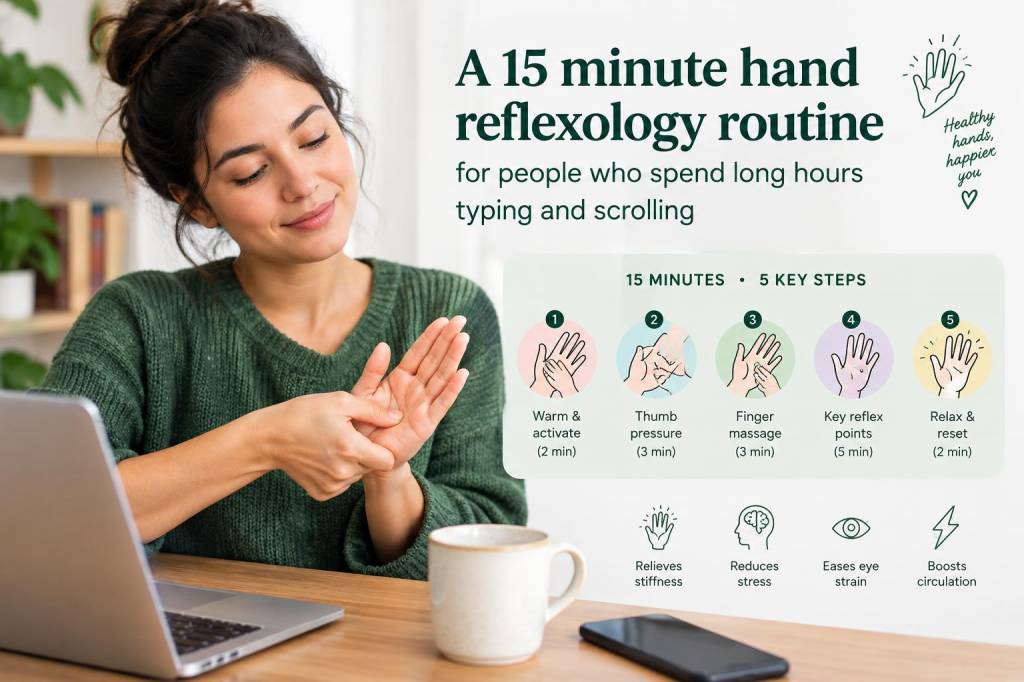
When I spend long stretches typing, answering messages, or scrolling through a screen, I notice a familiar pattern: my hands start to feel tight, my thumbs work harder than they should, and my forearms quietly begin to carry tension I did not fully notice. Many people assume wrist discomfort begins at the wrist, yet in my experience, the strain often starts much earlier in the chain, from small finger overuse, repetitive gripping, and a constant forward reach toward devices. A short hand reflexology routine can be a practical way to interrupt that pattern, soften the nervous system, and bring a little more ease back into the day.
I use this 15-minute routine when I want something simple, calm, and realistic. It is not complicated, it does not require special equipment, and it can be done almost anywhere: at a desk, on a sofa, or during a quiet pause between tasks. I like it because it feels both grounding and practical. It gives my hands attention without demanding a large block of time, and it can be adapted for people who are new to reflexology as well as those who already use touch-based self-care regularly.
Why I focus on hands for screen-related tension
Hands do far more than type. They grip phones, hold mugs, tap keys, swipe screens, and maintain small but repeated positions for hours at a time. Over time, this can leave the thumb pads, finger joints, palm, and wrist area feeling crowded or overworked. In reflexology, I think of the hand as a compact map of the whole body. That means a calm, attentive sequence on the hands can feel surprisingly restorative, not only locally but also in a broader sense of balance and ease.
For people who sit with devices for work or leisure, I often notice a few common complaints: tight thumbs, tired finger joints, a heavy sensation in the forearms, and a general feeling of being “stuck” in one posture. A hand reflexology routine cannot replace medical care, and it is not meant to diagnose anything, but it can be a supportive daily practice. I see it as a way to invite circulation, awareness, and relaxation back into areas that are asked to work too hard.
What I prepare before I begin
I keep preparation very simple. A comfortable chair helps, and a small towel can be useful if your hands feel cool. I sometimes use a natural hand cream or a small amount of oil to reduce friction, especially if the skin feels dry. A quiet environment is lovely, but not essential. Even if life feels busy, a few steady breaths can create enough of a pause to begin.
Before starting, I usually remove rings if they feel restrictive, rest my shoulders, and let my jaw soften. I also check in with pressure. One of the most useful things I have learned is that more pressure is not more effective. A comfortable, responsive touch usually works better than force. If an area feels sensitive, I stay lighter and slower there.
A 15-minute hand reflexology routine
I divide the routine into a series of short stages so it feels easy to remember. I work on one hand, then repeat on the other. If 15 minutes feels long on a busy day, I sometimes do just one side and switch hands the next time. Consistency matters more than perfection.
- Settle and breathe: Hold one hand in the other and take five slow breaths. Notice warmth, texture, and any tension without trying to change anything yet.
- Warm the palm: Use the thumb of the opposite hand to make gentle sweeping strokes across the palm, from wrist toward fingers. Repeat for about one minute.
- Thumb release: Massage the base of the thumb using small circles. Many people carry a lot of device-related strain here. Work slowly for one to two minutes.
- Finger traction: Gently hold each finger at its base and glide toward the tip with a soft pulling motion, one finger at a time. This can feel especially helpful after long typing sessions.
- Knuckle circles: Trace small circles over the knuckle line across the back of the hand. Keep the motion steady and light.
- Palm points: Press into any tender or tired areas in the palm, holding each point for a few breaths. I often linger near the center of the palm and the pad below the fingers.
- Wrist sweep: Stroke around the wrist and up a little way into the lower forearm. This helps the hand feel connected to the rest of the arm.
- Finish with stillness: Hold the hand quietly for several breaths, noticing warmth, softness, or any change in sensation.
Then I repeat the same sequence on the other side. If I have more time, I end with both hands resting palm-up for one final minute of stillness.
What each part feels like in practice
People often ask me what reflexology should feel like. My answer is that it should feel attentive, not aggressive. A good session may bring warmth, tingling, mild tenderness, or a sense of softening. It may also feel deeply relaxing in a way that is hard to describe until you experience it. For screen-related tension, the thumb work is often the most noticeable part because the thumb is so heavily involved in phone use and keyboard habits.
I also pay close attention to the quality of the breath. If I notice myself holding my breath while working on a tender spot, I slow down. Breath often tells me whether the pressure is helpful or too much. When the breath becomes steady again, I know I am usually in a good range.
How I adapt it for different needs
I use this routine in a flexible way because not everyone has the same hands or the same daily demands. Some people have very dry skin, some have joint stiffness, and some simply want a quick reset during a lunch break. Here is how I adapt it:
| Need | Adjustment | Reason |
|---|---|---|
| Dry skin | Use a small amount of cream or oil | Reduces friction and adds comfort |
| Sensitive joints | Use lighter pressure and shorter holds | Keeps the routine soothing |
| Very tight thumbs | Spend extra time at thumb base and first finger web | Targets common device strain |
| Limited time | Do a 5-minute version on one hand only | Makes daily use more realistic |
| High stress | Add longer breathing pauses between each section | Supports nervous system downshift |
I often remind people that regularity matters more than length. A short, calm routine done often can be more useful than a perfect session done rarely. Even a few mindful minutes can change how the hands feel before returning to work or evening tasks.
Common mistakes I see when people self-massage their hands
One common mistake is moving too quickly. The hands respond well to slow, deliberate contact. Another is pressing so firmly that the routine becomes another form of effort. If the goal is to unwind tension, the touch should invite release rather than create more guarding. I also see people rush past the thumb area, even though it is often one of the most overused spots for anyone who types or scrolls often.
Another pattern is forgetting the wrist and lower forearm. The hand is not isolated from the rest of the arm, so a little attention above the wrist can make the whole sequence feel more complete. I also encourage people not to chase a dramatic sensation. Subtle warmth, softening, and improved comfort are all valid responses.
When I would pause or seek medical advice
Although I find hand reflexology very useful for everyday tension, I would pause if a hand feels acutely swollen, sharply painful, numb, injured, or suddenly weak. If symptoms persist, change quickly, or interfere with daily life, I would recommend speaking with a qualified health professional. Reflexology is a supportive practice, not a replacement for assessment when something does not feel right.
I also pay attention to repetitive strain symptoms that do not improve with rest. If someone tells me that typing or scrolling causes ongoing pain, tingling, or loss of strength, I take that seriously. A reflexology routine may still be part of a wider self-care plan, but it should sit alongside sensible ergonomics, regular breaks, and appropriate medical advice when needed.
Ways I like to fold it into daily life
In real life, routines work when they fit naturally into ordinary moments. I sometimes do this sequence after a long writing session, after a train journey with phone use, or before bed when my hands feel restless. It can also pair nicely with a cup of tea, a short walk, or a few gentle shoulder rolls. The point is not to add another task to an already full day. The point is to create a small pocket of care that helps the body settle.
If you use a laptop for work, I suggest trying the routine once mid-morning and once in the evening for a few days, then noticing what changes. You may find that your fingers feel freer, your grip feels softer, or your whole upper body feels a little less braced. Those small shifts matter. They often signal that the nervous system has received a clear message: you are allowed to soften, even while life stays busy.
For me, this is one of the quiet strengths of reflexology. It brings attention back to places that are usually asked to perform without complaint. A hand routine like this turns a daily strain point into a moment of care, and that simple change can ripple outward into the rest of the day.