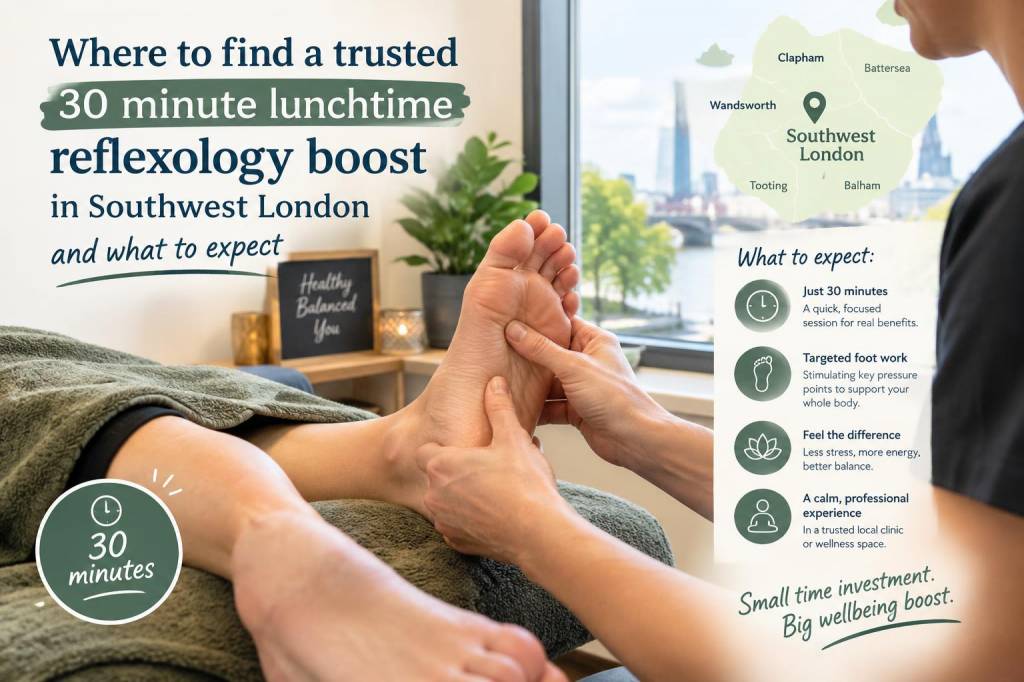
A 30‑minute lunchtime reflexology session can be a surprisingly powerful reset: enough time to reduce stress, ease jaw or neck tension, and come back to work clearer and calmer. If you work or live in Southwest London and want a quick, trusted boost during your day, here’s a practical guide to where to find reliable short sessions and exactly what to expect so you can book with confidence.
Where to look for trusted 30‑minute lunchtime sessions
Start local and look for practitioners who advertise specifically “express,” “lunch break” or “mini” reflexology treatments. These sessions are designed to be focused and efficient — you won’t get the full 60–90 minute restorative ritual, but you will get targeted relief. Good places to search:
- Independent reflexology clinics and wellbeing studios across SW London (Clapham, Balham, Putney, Wimbledon, Tooting, Wandsworth).
- Holistic therapy hubs and shared treatment rooms where experienced therapists offer short appointments.
- Local gyms, co‑working spaces and community centres that host weekly therapists for office workers.
- Salon and spa websites that list “express reflexology” or “lunch time treatments.”
- Online platforms like Treatwell or Booksy — filter for 30‑minute treatments and read reviews.
When you find a potential match, check the practitioner’s profile for training, insurance and client feedback. A short session still benefits from a skilled therapist: look for mention of advanced reflexology techniques, experience with workplace stress or targeted issues (like headaches or digestion), and clear cancellation/late arrival policies.
Recommended neighbourhoods and a few practical spots
Southwest London is full of pockets where you can squeeze in a quick treatment between meetings:
- Clapham/Balham: Lots of independent therapists share studio spaces; easy to reach from Zone 2 offices.
- Putney/West Wimbledon: Good for short sessions if you’re near the river or commuting via South Western Railway.
- Tooting/Wandsworth: Community‑focused clinics and evening or lunchtime availability for parents and local workers.
- Earlsfield/Colliers Wood: Often quieter and more flexible with midday appointment windows.
Specific venues change, but many therapists list lunchtime slots on their websites. If you prefer booking through a practitioner directly, a short email or a call asking for a 30‑minute “lunchtime reflexology” slot usually gets a quick response. If you’re short on time, ask about the exact start and finish times to ensure you’ll make it back to your desk or afternoon meeting.
What a 30‑minute reflexology session looks like
Here’s a typical flow so you know what to expect when you arrive:
- Quick check‑in (2–3 minutes): You’ll confirm any acute issues or contra‑indications (pregnancy, recent surgery, deep vein thrombosis, active infections, etc.).
- Brief consent and focus selection (1–2 minutes): You’ll agree the session’s focus — relaxation, headache relief, digestion, sleep support — so the therapist can prioritise points.
- Seated or reclined work (20–24 minutes): Many lunchtime sessions are done seated for speed, but a short recline on a couch or portable couch is common too. The therapist uses targeted reflex points on feet, hands or sometimes ears. Techniques are precise and rhythmic to stimulate relaxation and nervous system balance.
- Aftercare and short debrief (2–3 minutes): The therapist will suggest simple things to do for the rest of the day (hydration, short breathing exercise, or a foot stretch) and book follow‑ups if needed.
Expect a calm, focused experience. It won’t be a deep, hour‑long journey through every reflex map, but it will leave you noticeably lighter, often with loosened shoulders, clearer headspace and reduced jaw clenching.
What to wear and practical tips
- Comfortable clothing: Shoes and socks will be removed for foot work. Wear trousers you can roll up easily or a skirt if that’s simpler.
- Arrival time: Try to arrive 5 minutes early to avoid rushing the check‑in. Practitioners often run tight schedules around lunch slots.
- Hydration: Drink water before and after. Reflexology can help move stagnant fluids; hydration aids that process.
- Phone etiquette: Put your phone on silent. If you need to take a call, ask the therapist first — short sessions are best undisturbed.
- Timing your lunch: If you want to eat afterwards, choose something light. A heavy meal can dull the post‑session clarity.
How to choose the right practitioner
Trust and clarity are key. Here’s what I look for when recommending someone for a 30‑minute slot:
- Clear service description: The listing should state duration, what’s included and whether it’s seated or reclined.
- Relevant experience: Look for therapists who mention short treatments, workplace stress or targeted symptom work.
- Insurance and training: Professional reflexologists will list their training institute and insurance provider.
- Good punctuality and communication: Lunchtime clients need reliable timing — choose someone who responds promptly and sticks to schedules.
Simple self‑care to complement a lunchtime boost
If you can’t get out every day, try a five‑minute reflexology micro‑routine at your desk or after work. I often teach clients these to stretch out the benefits of their professional sessions:
- Seated, remove one shoe and cross the ankle onto the opposite knee.
- Use the thumb to apply steady pressure along the arch of the foot, working from heel to ball for one minute.
- Rotate the foot gently, then use circular thumb motions on the ball of the foot for 30–60 seconds.
- Finish with a long, gentle stroke from toes to heel to encourage relaxation.
Try this after a short reflexology session to extend the sense of calm for the afternoon. A small bottle of aromatherapy roller (lavender or basil blends) can also help you anchor the relaxed state when you return to work.
Common questions people ask
Will 30 minutes be enough? For immediate stress and tension relief, yes. For deeper chronic issues, treat it as part of a short series (3–6 sessions) or mix with a full 60‑minute session when you can.
Is it safe during pregnancy? Many reflexologists offer pregnancy‑appropriate sessions but will avoid certain reflexes in the first trimester. Always mention pregnancy when booking.
Can I have reflexology at work? Some workplaces happily host therapists in meeting rooms. Check with HR and ensure a private space and scheduled break time.
How often should I come? For lunchtime maintenance, once a week or fortnight is common. If you’re trying to manage a flare‑up, a short course of two or three weekly sessions can help.
If you want local recommendations or a short list of available practitioners in SW London I trust, visit https://www.reflexologysouthwestlondon.co.uk or drop me a message — I can point you to current lunchtime availability in your neighbourhood.