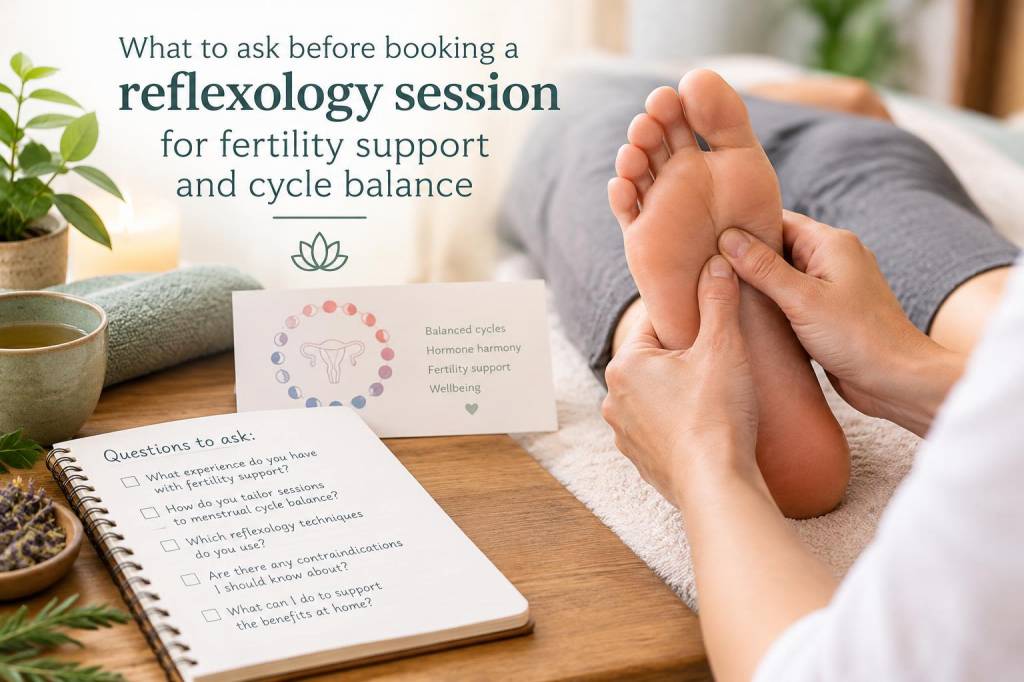
When someone asks me about reflexology for fertility support or cycle balance, I always say that a good session begins before the treatment couch. The real starting point is the conversation you have with the practitioner. That conversation tells you whether the person in front of you understands your needs, respects your medical history, and can offer care that feels safe, realistic, and supportive. Fertility can be emotional, cycle changes can be frustrating, and many people arrive with a mix of hope, uncertainty, and urgency. I think it helps to know exactly what to ask so you can book with confidence.
In my own work, I have seen that fertility-related concerns are rarely just about one symptom. They may involve irregular periods, painful ovulation, heavy bleeding, stress, sleep disruption, hormonal shifts, or the emotional weight of trying to conceive. Because of that, I believe your questions should go beyond “Do you do reflexology?” You deserve clear answers about training, experience, session style, boundaries, and whether the practitioner can work alongside medical care if needed.
Ask about training and experience with fertility-related care
I always encourage people to ask what training the practitioner has completed, especially if they want support for fertility or menstrual cycle concerns. Reflexology is a skill that grows with study and practice, but not every practitioner will have the same depth of experience in fertility-related work. You may want to ask whether they have specific training in reproductive health, hormonal balance, or working with clients who are trying to conceive.
It also helps to ask how often they have supported people with similar concerns. I would listen for answers that feel grounded and honest rather than exaggerated. A thoughtful practitioner will not promise results, but will explain how they work, what they notice in sessions, and what a realistic care plan might look like. For me, that honesty matters more than any polished sales language.
You might ask:
- What training have you completed in reflexology and women’s health?
- Have you worked with clients seeking fertility support or cycle balance?
- Do you adapt sessions for people who are trying to conceive, pregnant, or managing hormonal changes?
- How do you approach support for irregular or painful cycles?
Ask what fertility support means in their practice
Fertility support can mean different things to different practitioners, so I think it is important to ask what that phrase actually means in their hands. Some people use reflexology to encourage deep relaxation, reduce stress, and support general wellbeing. Others focus on monthly rhythm, body awareness, or creating a calming routine during a conception journey. I believe clear language protects you from disappointment and helps you understand what reflexology can and cannot do.
If a practitioner implies that reflexology will fix fertility problems, I would be cautious. In my experience, a responsible approach is more supportive and more respectful. Reflexology may help create the conditions for rest, nervous system regulation, and self-awareness, but it is not a replacement for medical investigation or treatment. If you have a known fertility diagnosis, that distinction matters even more.
Useful questions include:
- What does fertility support look like in a session?
- Are your sessions focused on relaxation, cycle awareness, or general wellbeing?
- Do you work in a way that complements medical fertility treatment?
- What sort of changes might someone realistically notice over time?
Ask about cycle awareness and how sessions are timed
For people who want support with cycle balance, timing can matter. I often talk with clients about where they are in their cycle, how they feel during different phases, and whether their symptoms follow a pattern. A practitioner who understands cycle awareness should be able to explain how they may adjust their approach across the month.
You can ask whether they consider the menstrual cycle when planning sessions and whether they recommend a regular rhythm of appointments. Some people prefer weekly visits for a short period, while others benefit from a monthly session aligned with certain cycle phases. There is no single correct plan, but there should be a reason behind the choice.
I also think it is helpful to ask whether the practitioner tracks symptoms with you over time. That can be as simple as noting sleep, mood, cramping, bloating, energy, and bleeding patterns. Those notes can reveal trends that are easy to miss when you only think about one isolated appointment.
Ask what a session will feel like from start to finish
Before booking, I would want to know exactly what the appointment involves. Will there be a detailed consultation? How long will hands-on work last? Will the session be quiet, or will there be conversation throughout? Will the practitioner explain what they are doing as they work? These details matter, especially if you are already feeling vulnerable or tired.
For fertility support, I think a calm and unrushed atmosphere is especially important. You may want to know whether the practitioner uses gentle pressure, whether they adapt for sensitivity, and whether they avoid areas or techniques that feel too intense. If you have experienced pelvic pain, anxiety, or medical procedures, your comfort level may shift quickly, so clear communication is essential.
You could ask:
- How long is the consultation and treatment?
- Will you explain what you are doing during the session?
- Can pressure be adjusted if I am sensitive?
- Do you prefer quiet sessions or conversation?
Ask about medical conditions, medication, and collaboration
I always think it is wise to ask how the practitioner handles medical history. If you have endometriosis, PCOS, thyroid issues, fibroids, a history of miscarriage, or any fertility treatment planned or underway, the practitioner should invite that information and respond carefully. They should also ask about medication, recent procedures, and any advice you have received from a doctor or clinic.
In my view, good reflexology practice never isolates itself from the rest of your care. A supportive practitioner should be willing to work alongside your doctor, fertility clinic, midwife, or other health professional when appropriate. They should also know their limits and refer you back for medical assessment if something sounds concerning.
Questions worth asking include:
- Do you take detailed health histories before treatment?
- How do you adapt care for conditions such as PCOS, endometriosis, or thyroid imbalance?
- Can reflexology be used alongside fertility medication or treatment plans?
- When would you suggest I seek medical advice instead of booking another session?
Ask how they handle emotional wellbeing
Fertility journeys can carry grief, frustration, hope, and exhaustion, sometimes all in one week. I think a practitioner should understand that emotional state is part of the picture, not an awkward extra. Reflexology is not therapy, but a session can still feel deeply restorative if the person holding space is compassionate, steady, and non-judgmental.
I would ask how they respond if you arrive overwhelmed, tearful, or anxious. Do they make space for a slower session? Do they allow silence? Do they know when to suggest extra support elsewhere? These are simple questions, but they reveal a lot about the care you are likely to receive.
If you are asking on behalf of a partner or a friend, you may also want to know whether the practitioner is comfortable supporting someone who is there for emotional regulation rather than only physical symptoms. That openness can make a real difference.
Ask about home care after the session
One thing I value in practice is giving people something practical to carry home. That might be a simple foot routine, breathing exercise, hydration reminder, or gentle self-massage suggestion. For fertility support and cycle balance, home care can help extend the feeling of calm beyond the appointment itself.
Ask whether the practitioner offers simple aftercare recommendations and whether they will tailor those suggestions to your lifestyle. I often find that small, realistic habits work better than ambitious plans. A few minutes of quiet rest, a warm drink, or a short evening routine may support your system more effectively than a long list of tasks you will never keep up with.
You might ask:
- Do you provide home care suggestions after treatment?
- Will you show me anything I can do between sessions?
- Can you suggest a simple routine for cycle awareness?
- How should I feel after the treatment, and what is normal?
Ask about practical details that shape your comfort
Practical details can affect whether a session feels supportive or stressful. I always recommend checking location, parking, access, room temperature, cancellation policy, and appointment length. If you are travelling across London while managing fatigue or cycle symptoms, these details matter more than you might expect.
You may also want to ask whether the practitioner has experience with clients who need flexibility around appointment timing. Fertility treatment schedules, unpredictable cycles, and energy fluctuations can make planning difficult. A good practitioner will understand that life does not always run on a tidy timetable.
| Question | Why it matters | What a reassuring answer may sound like |
|---|---|---|
| What training do you have? | Shows background and professional depth | Clear details about reflexology study and relevant health work |
| How do you support fertility concerns? | Clarifies expectations | Supportive, realistic focus on relaxation and wellbeing |
| Can sessions be adapted for cycle symptoms? | Helps match treatment to current needs | Yes, with changes in pressure, pace, or focus |
| Can this work alongside medical care? | Important for safety and coordination | Yes, with openness to collaborate and refer when needed |
Ask yourself whether you feel heard
One of the most important questions is not only what you ask them, but how you feel after asking. Do you feel listened to? Do you feel rushed? Do you feel that your concerns were taken seriously without being overpromised away? I trust that feeling a great deal.
In my experience, the best reflexology relationships begin with mutual respect. You should be able to ask direct questions without feeling difficult. You should leave the conversation clearer, calmer, and more informed than when you arrived. If that does not happen, I would keep looking.
When fertility support or cycle balance is your focus, I believe the right practitioner is someone who combines skill with kindness, structure with flexibility, and confidence with humility. That is the sort of care that creates space for your body, your rhythm, and your wider wellbeing.