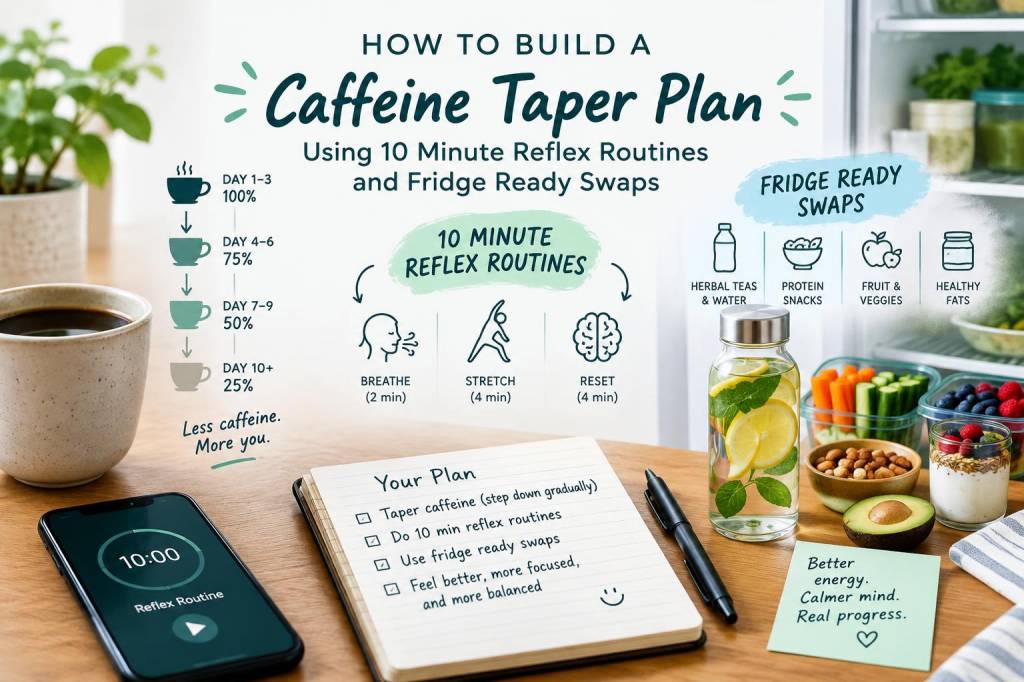
If you’ve ever tried to cut back on caffeine and felt foggy, irritable or struggled to sleep, you’re not alone. I’ve helped many clients navigate a gentle caffeine taper while using short reflexology routines to ease withdrawal symptoms and support better sleep and energy. In this post I’ll share a practical, fridge‑ready plan and three 10‑minute reflex routines you can use daily to make the transition smoother and kinder to your body and mind.
Why taper rather than quit cold turkey?
Quitting caffeine suddenly can trigger headaches, brain fog, low mood and sleep disruption. A taper reduces the intensity of those symptoms and gives your nervous system time to adapt. It’s also more sustainable: small, consistent changes are easier to maintain. Reflexology doesn’t cure withdrawal, but it helps reduce stress, improve circulation and soothe the nervous system — which makes cravings and headaches more manageable.
How long should a taper be?
I usually recommend a 2–4 week taper depending on how much caffeine you currently consume. If you drink more than 400 mg a day (roughly four strong coffees), aim for a 4‑week plan. For 1–2 cups a day, 2 weeks is often enough. The key is gradual reduction: losing about 10–20% of intake every 3–4 days feels doable for most people.
Simple fridge‑ready swaps to keep on hand
Having tasty, low-effort alternatives in your fridge or cupboard removes the friction of cravings. Here are swaps I tell clients to prepare in advance:
- Cold brew chicory or dandelion coffee — same ritual, no caffeine. Brands like Teeccino or chicory‑based blends make good cold brews.
- Hibiscus or peppermint iced tea — refreshing and hydrating, with a lift of flavour.
- Kombucha — mildly fizzy and contains a little lift without strong caffeine (check labels).
- Golden turmeric milk (ready in a bottle) — warming, anti‑inflammatory and soothing for evening cravings.
- Lemon water with a splash of apple cider vinegar — bright flavour and a metabolism cue in the morning.
- Sparkling water with a shot of cold brew — if you need a tiny caffeine reduction step.
- Protein or oat milk shakes — keep a jar of powdered plant protein in the fridge for a quick, sustaining drink.
Fridge checklist (printable)
- Cold brew chicory/dandelion concentrate
- Hibiscus tea bags or loose leaf
- Bottles of kombucha (low sugar)
- Ready turmeric milk or a homemade bottle
- Sparkling water
- Fresh lemons and apple cider vinegar
- Oat milk or protein powder
Example taper schedule
Below is a simple table for a 3‑week taper if you currently drink about 3 coffees (approx. 300 mg caffeine). Adjust times and percentages to suit your intake.
| Week | Daily caffeine target | Practical swap ideas |
|---|---|---|
| Week 1 | ~240 mg (reduce by 20%) | One coffee replaced by chicory cold brew; morning lemon water |
| Week 2 | ~160 mg (another 33% reduction) | Second coffee replaced by hibiscus or kombucha; small afternoon coffee retained |
| Week 3 | ~80 mg (half of previous) | Single small morning coffee or espresso shot; use sparkling water with a splash of cold brew if needed |
| After Week 3 | Optional low‑caffeine habit (50–100 mg) or caffeine‑free | Keep swaps for rituals; maintain reflex routine for energy balance |
Three 10‑minute reflex routines
Each of these routines focuses on common withdrawal issues: headaches, fatigue and sleep disruption. Use them daily, ideally at the same times (morning energy, mid‑afternoon low, evening wind‑down). Press gently but firmly: reflex work is calming, not painful. Always listen to your body and slow down if needed.
Morning energiser (10 minutes)
- Start sitting comfortably. Take three slow belly breaths.
- Kidney reflex — on the sole, locate the area just above the arch. Use the thumb in small clockwise circles for 2 minutes per foot. This supports adrenal balance and energy.
- Solar plexus — the pad of the foot below the ball. Hold with moderate pressure for 1 minute per foot to calm stress hormone spikes.
- Big toe — gently rub the big toe for 1 minute per foot (connects to the brain and head; helps clear morning fog).
- Finish with a 30‑second toe wiggle and three grounding breaths.
Afternoon slump support (10 minutes)
- Start with a sip of your fridge swap (hibiscus, lemon water or kombucha).
- Solar plexus — apply gentle pressure with thumbs on both feet for 2 minutes to soothe stress and tension.
- Diaphragm reflex — a horizontal band across the mid‑sole. Use flat thumbs to sweep side to side for 2 minutes to encourage deep breathing.
- Neck and shoulder reflex (on toes) — press the base of the toes where they meet the foot for 1 minute per foot to release neck tension often associated with caffeine withdrawal.
- Finish by holding the foot with both hands and taking five deep breaths.
Evening wind‑down (10 minutes)
- Start dim lights and try a warm turmeric milk from the fridge.
- Head reflex (big toe)
- Heart reflex — the area below the ball of the foot toward the inner edge. Use slow, calming pressure for 2 minutes per foot to balance mood and support sleep.
- Spine line — run thumb along inner edge of the sole from heel to big toe for 2 minutes per foot to relax tension held in the back and nervous system.
- Finish lying down if possible, placing a hand on the belly and taking five slow breaths.
Practical tips for sticking to the plan
- Prepare swaps on Sunday for the week: brew chicory, bottle turmeric milk, chill hibiscus tea.
- Track your taper in a notebook or an app. Celebrate small wins — fewer jitters, better sleep, clearer thinking.
- Pair reflex routines with rituals: a candle, a playlist or a specific mug creates a cue that supports habit change.
- Expect a day or two of mild withdrawal symptoms — use the morning or afternoon routine to ease them. If headaches are severe, consult a healthcare professional.
- If you rely on caffeine for concentration at work, shift demanding tasks to when you feel most alert and use brief movement breaks instead of extra coffee.
If you’d like, I can send a printable version of the taper table and a one‑page reflex routine sheet you can stick to your fridge. These small practical tools make the process feel far less daunting. When clients combine small dietary swaps with consistent reflex care, I often see better sleep, steadier energy and fewer mood dips within a couple of weeks.