If you’re looking for affordable reflexology in Southwest London, you’re in the right place. I run community sessions and I’ve also worked with a number of local clinics and charities, so I know where to find good-value treatments without compromising on quality. Below I share where to look, typical costs, what to expect in a community clinic setting, and practical tips to make your visit comfortable and effective.
Where to find affordable reflexology near you
There are several good options for lower-cost reflexology in Southwest London. Depending on your needs and availability, consider:
Community clinics and charity-run sessions — many community centres, church halls and local charities host weekly or monthly clinics led by experienced reflexologists offering reduced-fee sessions. These are often aimed at older adults, carers, or people on low incomes.Student clinics — training schools and colleges that teach reflexology often run supervised student clinics where treatments are cheaper. Sessions are supervised by qualified tutors and make a great option if cost is a primary concern.Pay-what-you-can or donation-based events — keep an eye on local wellbeing fairs, pop-up events or “community wellbeing days” where therapists offer short reflexology taster sessions for a donation.Sliding-scale private practitioners — some freelance reflexologists in SW London keep a few slots at reduced rates for locals or those on low incomes. It’s always worth asking politely when you book.Social prescribing and health partnerships — local social prescribing link workers sometimes refer people to community reflexology as part of a wellbeing plan. Your GP surgery or local health centre can tell you if this is available in your area.Common neighbourhoods where discounted or community options appear frequently include Battersea, Clapham, Balham, Putney, Wimbledon and Tooting. Community centres and faith groups in these areas often advertise slots on local Facebook groups, Nextdoor or community noticeboards.
Typical price ranges
To give you a realistic sense of cost (these are approximate and vary by provider):
| Type of session | Typical duration | Typical cost (GBP) |
| Community clinic / charity | 30–45 minutes | £10–£25 |
| Student clinic (supervised) | 45–60 minutes | £12–£30 |
| Sliding-scale private session | 45–60 minutes | £20–£40 (concession) |
| Private practitioner (standard) | 45–60 minutes | £45–£70 |
When I run community clinics, I usually offer 30–40 minute appointments at around £15–£25 — enough time for a focused treatment that targets stress relief, sleep or a specific complaint.
What to expect at a community clinic
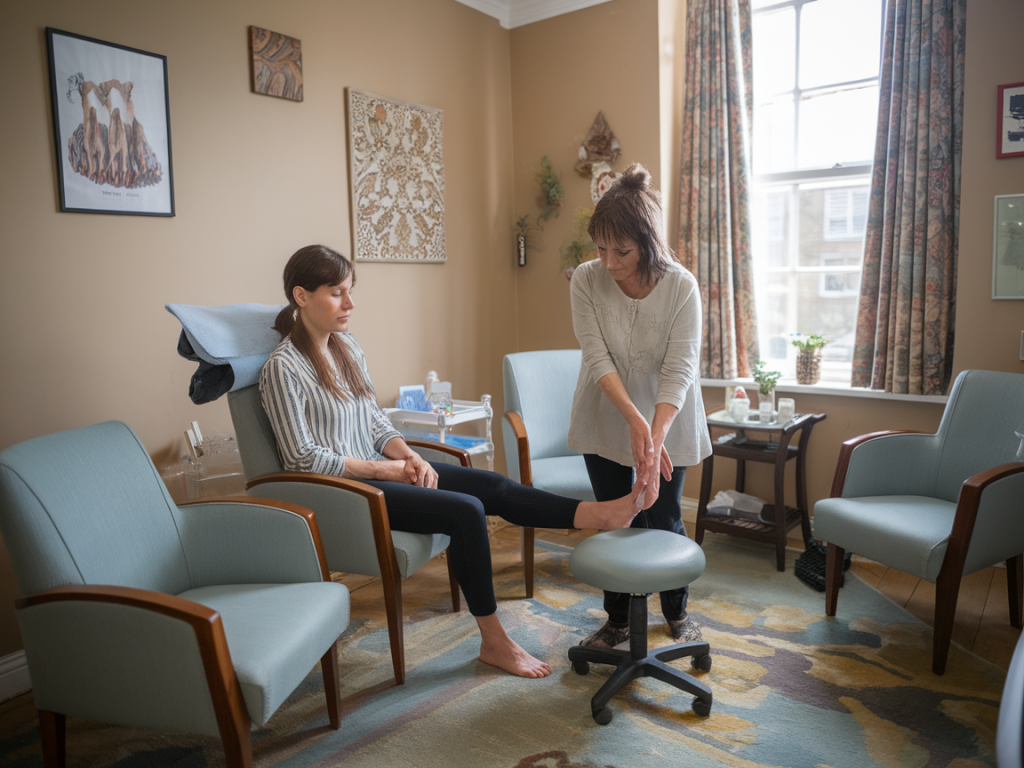
A community clinic is often busier and slightly less plush than a private therapy room, but the quality of care is still professional. Here’s the usual flow so you won’t be surprised:
Arrival and brief intake — you’ll be welcomed, asked to complete a short health form and to mention any medications, recent injuries or health conditions. This is important because reflexology is adapted around health needs.Short consultation — expect a verbal check-in about sleep, digestion, pain and stress. The reflexologist will explain what they plan to focus on.Treatment — most community sessions are performed on a reclining chair rather than a full therapy couch. I’ll usually work both feet, using pressure and specific reflex techniques to stimulate the nervous system and encourage relaxation.Aftercare chat — after the session there’s a brief discussion about how you felt and simple self-care tips to follow at home. You might be given a handout or shown a short routine to repeat.Session length may be slightly shorter than a private practice appointment, but you’ll still get a thorough, tailored treatment. Hygiene, confidentiality and professional boundaries are maintained to the same standards as private clinics.
How to prepare and what to bring
Preparing well helps you get the most from a shorter community session:
Wear comfortable clothing that allows your lower legs and feet to be easily exposed. You don’t need to remove trousers entirely — rolled-up sleeves or pant legs are fine.Bring a list of current medications and any relevant medical notes.Arrive a few minutes early to fill in forms and relax—this helps the treatment be more effective.Hydrate before and after the session. Reflexology can encourage fluid shifts and gentle detoxification, so water is helpful.If you’re pregnant, have deep vein thrombosis (DVT), recent surgery or an acute foot infection, tell the therapist ahead of booking. Modifications are available, and in some cases reflexology may be postponed.Benefits you can expect (and realistic timelines)
From my experience, people often feel immediate relaxation and lighter breathing after a session. Other benefits can include:
Improved sleep and reduced sleep latency (many clients report sleeping better after a few sessions).Less muscular tension and lower stress levels.Digestive calm — some clients notice steadier digestion after a short course.Support for chronic pain when integrated with other care approaches.Realistically, a single community session is usually a reset — helpful, but often best followed by regular sessions (for example, 4–6 weekly treatments) to see more sustained changes. Self-care routines you can do at home between treatments dramatically boost outcomes.
Questions to ask when you book
To ensure you get a safe, effective and good-value treatment, ask:
“Are you fully qualified and insured?” — look for membership with a professional body (for example the Association of Reflexologists (AoR) or registration with CNHC).“Who will supervise student sessions?” — if booking a student clinic, verify tutor oversight.“What is included in the session length?” — confirm whether time includes consultation and aftercare.“Do you offer concessions or sliding-scale fees?” — you might be able to access lower-cost slots if budget is an issue.Booking tips and local resources
Keep an eye on places that post community clinic schedules:
Local community centres and libraries (many have monthly wellbeing timetables).Facebook groups and Nextdoor for neighbourhood wellbeing events.College websites for complementary therapy programmes (look for “student clinic” or “therapy clinic” pages).The social prescribing link service at your GP surgery — ask reception if a link worker can help refer you to local low-cost wellbeing options.If you’d like a starting point, check local listings and then reach out to ask about concessions and student sessions — most therapists are pleased to help you find an option that fits your budget. I occasionally have community slots at https://www.reflexologysouthwestlondon.co.uk and list local events there, so it’s worth checking for updates and booking information.