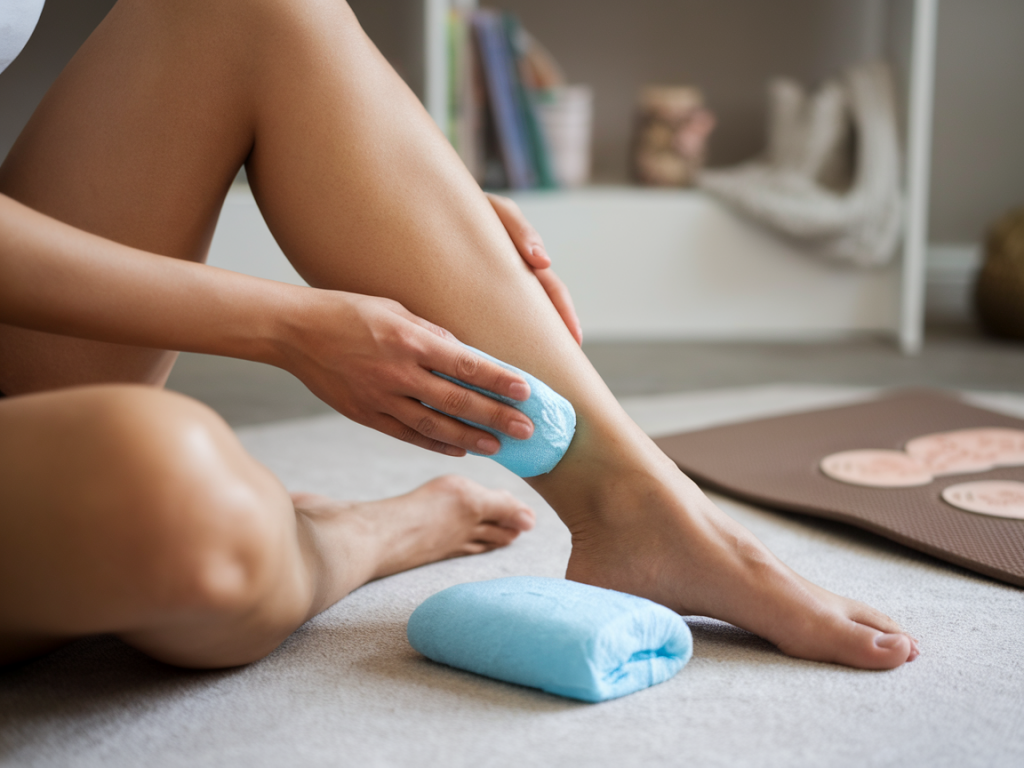
When someone comes to me after a minor ankle sprain they’re usually in a mix of shock, irritation and hope: shock at how quickly an ordinary step turned awkward, irritation at the interruption to daily life, and hope that a simple treatment will speed things up. Over the years I’ve found that combining a well-applied cold compress with targeted reflexology and gentle self-care can reduce pain and swelling, support circulation and help you get moving again—so long as you use both tools appropriately and safely.
Immediate first aid: what I do and why
In the first 48–72 hours after a sprain I prioritize reducing inflammation and protecting the injured tissues. I follow the evidence-informed approach commonly summarised as RICE/POLICE: Rest, Ice, Compression, Elevation (or Protect, Optimal Loading, Ice, Compression, Elevation). Practically, this means:
- Rest: Avoid weight-bearing where possible for the first 24–48 hours (crutches or a supportive boot if needed).
- Ice: Apply a cold compress for up to 15–20 minutes every 1–2 hours while awake—this reduces pain and limits swelling. I prefer reusable gel packs such as Arctic Flex or a simple bag of frozen peas wrapped in a towel.
- Compression: A light compression bandage helps limit swelling but shouldn’t be so tight that it impairs circulation.
- Elevation: Raise the foot above heart level as much as possible in those first days.
Cold works by vasoconstriction and by slowing nerve conduction, which reduces pain and secondary swelling. It’s a short-term tool—don’t leave ice on for hours. And if someone has poor sensation, diabetes or vascular disease, I avoid or modify ice use and recommend checking with their GP first.
How reflexology complements cold therapy
Reflexology isn’t a substitute for proper medical care, imaging or rehab when those are needed, but it’s an excellent adjunct for managing discomfort, calming the nervous system and encouraging lymphatic drainage. When I combine reflexology with a cold compress I aim for three things:
- Reduce pain by engaging parasympathetic relaxation and releasing endorphins.
- Support local circulation and lymphatic return through gentle techniques once acute inflammation has calmed.
- Provide practical self‑care tools the client can use at home to feel more in control of recovery.
Practical sequence I use in clinic or teach for home
Here’s a step-by-step routine I teach—safe for most minor sprains. If there’s severe pain, deformity, numbness or inability to bear weight, get medical assessment first.
- First 48 hours: Focus on cold compress, rest, elevation and gentle toe movement. Do not manipulate the ankle vigorously.
- After 48–72 hours: Start gentle reflexology work alongside continued cold when needed. The cold compress is best used first to reduce acute pain, then reflexology to calm the nervous system and promote circulation.
- Session outline (20–30 minutes):
- Comfortable resting position with the foot elevated and wrapped cold pack in place for 10–15 minutes.
- Remove the compress, dry the area and perform 10–15 minutes of gentle reflexology focusing on reflex points linked to the ankle, lymphatic drainage and relaxation.
- Finish with 5 minutes of breathwork and self‑care advice (gentle range-of-motion exercises, reapplication of cold if needed later, and elevation).
Key reflex points and simple techniques
I work mainly on the feet; here are reflex zones I use and how to approach them at home. Be gentle and stop if it increases pain.
| Reflex Zone | Location | Technique |
|---|---|---|
| Ankle/Lower Leg Reflex | Along the medial and lateral borders of the foot and around the heel | Use gentle thumb walking or light circular pressure—avoid strong pressure directly on the injured area for the first few days. |
| Lymphatic/Thoracic Duct Area | Medial arch and base of the big toe | Soft stroking and light holds to support lymphatic return and relaxation. |
| Solar Plexus/Diaphragm | Centre of the sole, just under the ball of the foot | Gentle sustained pressure to activate relaxation and parasympathetic tone. |
Self‑care tips and products I recommend
For home care, I often suggest a simple kit: a good reusable cold pack (Arctic Flex, TheraPearl or a gel pack like Deep Freeze), an arnica gel (we use Boiron Arnica Gel or similar) for topical comfort, a comfortable ankle support (not overly rigid unless advised), and a pair of supportive shoes as you begin to weight-bear.
- Apply cold for 15–20 minutes wrapped in a cloth—do this up to every 2 hours when awake for the first 48 hours.
- After 48 hours, alternate cold with gentle reflexology and begin controlled, pain-free range-of-motion exercises: ankle circles, dorsiflexion/plantarflexion, toe curls.
- Use breathwork: 4–6 slow diaphragmatic breaths while holding reflex points helps reduce pain perception and anxiety.
When to be cautious and red flags
I always advise seeking medical attention if you notice:
- Severe swelling, intense pain or an obvious deformity.
- Inability to bear weight after 48 hours or numbness/tingling in the foot.
- Signs of infection (increasing redness, warmth, fever) or if you have conditions like diabetes or vascular disease—reflexology and cold use should be discussed with your GP first.
What to expect during recovery
Most minor sprains improve significantly within 2–6 weeks with appropriate care. Reflexology won’t “repair” torn ligaments, but by reducing pain, improving sleep and calming the nervous system, it helps you engage with rehabilitation more comfortably. In clinic I usually schedule 1–3 short sessions early on, focusing on pain relief and relaxation, then move towards longer sessions emphasising mobility and resilience as the ankle heals.
If you’d like, I can guide you through a short at-home routine tailored to your exact symptoms—send a brief description of how the injury happened, current symptoms and any medical conditions, and I’ll suggest a step-by-step adaptation you can try safely.