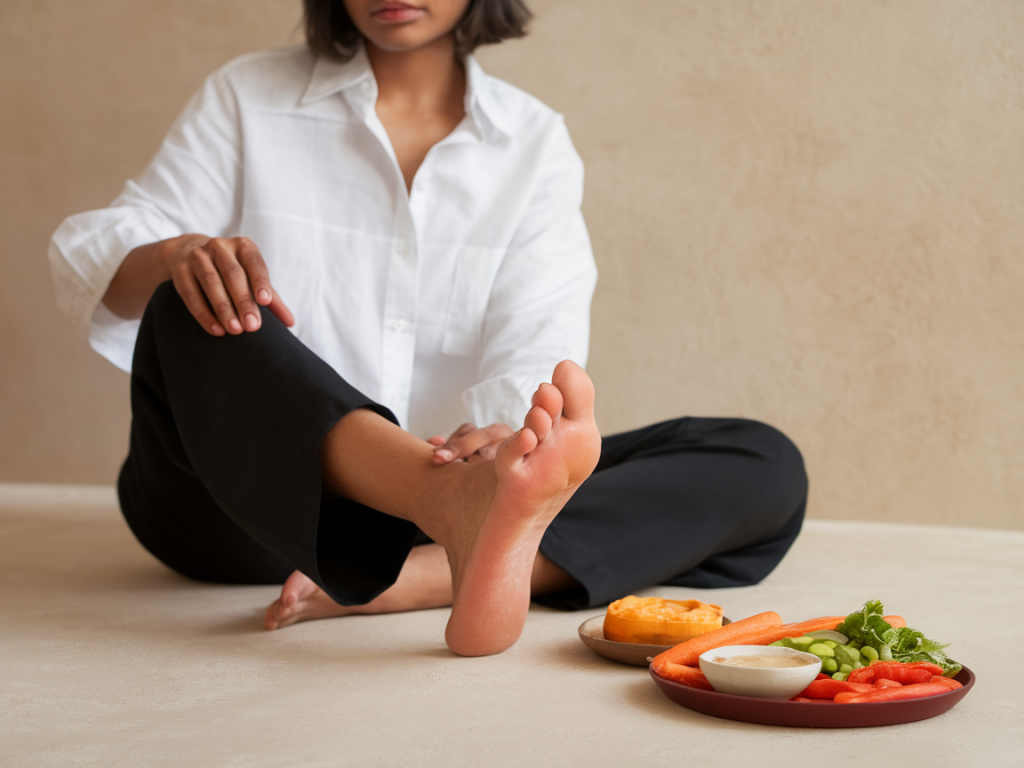
I often see clients who come to me frustrated: they’ve just eaten, they feel uncomfortably full, bloated or sluggish, and they want relief — fast. Over the years I’ve developed a simple, evidence‑informed routine that combines a 10‑point foot reflexology protocol with a couple of gentle snack choices designed to support digestion. When used together, you can often reduce post‑meal bloating within about 90 minutes. Below I walk you through the exact steps I use in the clinic and at home, why each part helps, and practical tips so you can try this safely and effectively.
Why reflexology plus snacks?
Reflexology works by applying pressure to reflex points on the feet that correspond to organs and systems in the body. While it doesn’t “cure” digestive conditions, gentle stimulation of digestive reflex points can promote relaxation, stimulate parasympathetic (rest‑and‑digest) activity and encourage movement in the gastrointestinal tract — things that help ease bloating.
Adding specific snacks helps because certain foods and herbs support digestion directly: fennel and peppermint can reduce gas and cramping, ginger can speed gastric emptying, and a small amount of soluble fibre can stabilise blood sugar and promote intestinal transit. Combining both approaches gives a calming, practical toolkit you can use when symptoms start.
When to use this routine
- If you feel bloated or excessively full within 15–60 minutes after a meal
- When you want non‑pharmacological support that’s safe for most people
- As a gentle way to encourage digestion after a heavier meal
Do not use this protocol if you have severe abdominal pain, unexplained weight loss, blood in stools, or a diagnosed serious gastrointestinal condition without discussing it with your GP first. Also avoid deep pressure on the feet if you have active foot injuries, recent fractures, deep vein thrombosis, or severe peripheral neuropathy.
The 10‑point foot protocol (step‑by‑step)
This is a gentle routine designed for rapid relief. Each point is held for about 30–60 seconds with light to moderate pressure and slow, intentional breathing. Aim to complete the whole routine in 15–20 minutes. I use thumbs and fingers; you can use a rounded end‑of‑pen tool or a specialised reflexology tool like a wooden stick if it feels more comfortable.
- Warm‑up: Rub the whole foot in broad, slow circles to warm tissues and relax the nervous system (30–60 seconds per foot).
- Solar plexus point (centre of the sole, just below the ball): firm, steady pressure to encourage diaphragmatic breathing and parasympathetic tone.
- Stomach reflex (left foot, mid‑arch area): gentle circular pressure. This is the main point for upper digestion.
- Small intestine reflex (both feet, central arch): use long, sweeping strokes from the inner to outer arch to encourage motility.
- Large intestine/colon reflex (outer edge of both feet, from heel toward little toe): follow the colon path with gentle pressure and strokes.
- Liver and gallbladder reflex (right foot, mid‑arch toward instep): light pressure to help bile flow and fat digestion.
- Duodenum/pylorus area (left or right foot just under the ball): small circular motions to ease gastric emptying.
- Kidney reflex (centre of sole near the arch): press gently to support fluid balance and detox pathways.
- Thoracic diaphragm band (a transverse band across both feet near the base of toes): light holding to free the breath and release tension.
- Toe massage (all toes): gentle pull and rotation of each toe, encouraging lymphatic and nerve relaxation.
Repeat points that feel particularly tight or tender, but stay within a comfortable pressure — you want relief, not pain. Throughout, breathe slowly: inhale for a count of 4, exhale for 6–8. Longer exhales stimulate the vagus nerve and support digestion.
Simple snacks that support digestion
If you feel bloated after a meal, wait 10–15 minutes before trying the reflexology routine. While you prepare the foot session, have a small digestive snack or drink. Keep portions tiny — the aim is to support digestion, not to add bulk.
| Snack/Drink | Why it helps | How to use |
|---|---|---|
| Warm fennel tea | Carminative — reduces gas and relaxes intestinal muscles | Steep 1 tsp crushed fennel seeds in hot water for 5–7 minutes. Sip slowly. |
| Fresh ginger slices or ginger tea | Speeds gastric emptying, reduces nausea | Thin slices or 1 tsp grated ginger in hot water; sip slowly. Avoid if you’re on blood thinners without medical advice. |
| Peppermint tea (Mentha piperita) | Relaxes smooth muscle in the gut, eases cramping | Good for non‑acid reflux bloating. Not recommended if you have severe GERD. |
| 2–3 fennel seeds or a bay leaf infused in warm water | Chewing fennel seeds after meals is traditional and effective for gas | Chew slowly, or make a quick infusion. |
| Small banana or a few apple slices | Gentle soluble fibre and potassium to support transit and fluid balance | Keep portion small to avoid adding bulk. |
Timing and practical flow
Here’s a practical timeline you can follow when bloating starts:
- 0–10 minutes: Sit upright, try to walk gently for 5 minutes (walking aids digestion). Sip a small cup of fennel or ginger tea.
- 10–30 minutes: Begin the 10‑point foot protocol while continuing to sip the tea slowly. Focus on long exhalations with each point.
- 30–60 minutes: If symptoms persist, add light movement — a short, slow walk — and continue hydrating. Consider a small banana or a couple of apple slices.
- 60–90 minutes: Reassess symptoms. Many people notice significant reduction by now. If bloating persists or worsens, seek medical advice.
Additional tips that help
- Eat mindfully and slowly: chewing well reduces swallowed air and improves digestion.
- Limit carbonated drinks if you’re prone to bloating — they increase intestinal gas.
- Avoid large portions of very fatty or highly processed foods when possible; fats slow gastric emptying and can increase the feeling of fullness.
- Gentle abdominal massage (clockwise, from right lower quadrant around the belly) for 2–3 minutes can complement foot work.
- Keep hydrated, but avoid gulping cold water immediately after a heavy meal; room temperature or warm drinks are often easier on digestion.
What to expect and when to seek help
Most people notice warming, a reduction in tightness and improved wind movement within the first 30–90 minutes. Reflex points may feel sensitive at first; that sensitivity often decreases with regular practice. If bloating is accompanied by severe, sharp pain, high fever, persistent vomiting, unexplained weight loss or blood in the stool, stop home treatments and contact your GP or emergency services.
If you’d like guided support, I offer in‑person sessions in Southwest London where I can tailor the protocol to your health history and show you a personalised self‑care routine. For many clients, learning a few reflexology skills and choosing the right snacks gives them fast, practical relief and helps reduce recurrence over time.
Try this combination the next time you feel uncomfortably bloated and let it become part of your toolkit for gentle, natural relief. If you have questions about adapting the protocol to a specific condition or medication, ask your healthcare provider or bring your questions to a reflexology session so we can work through them together.