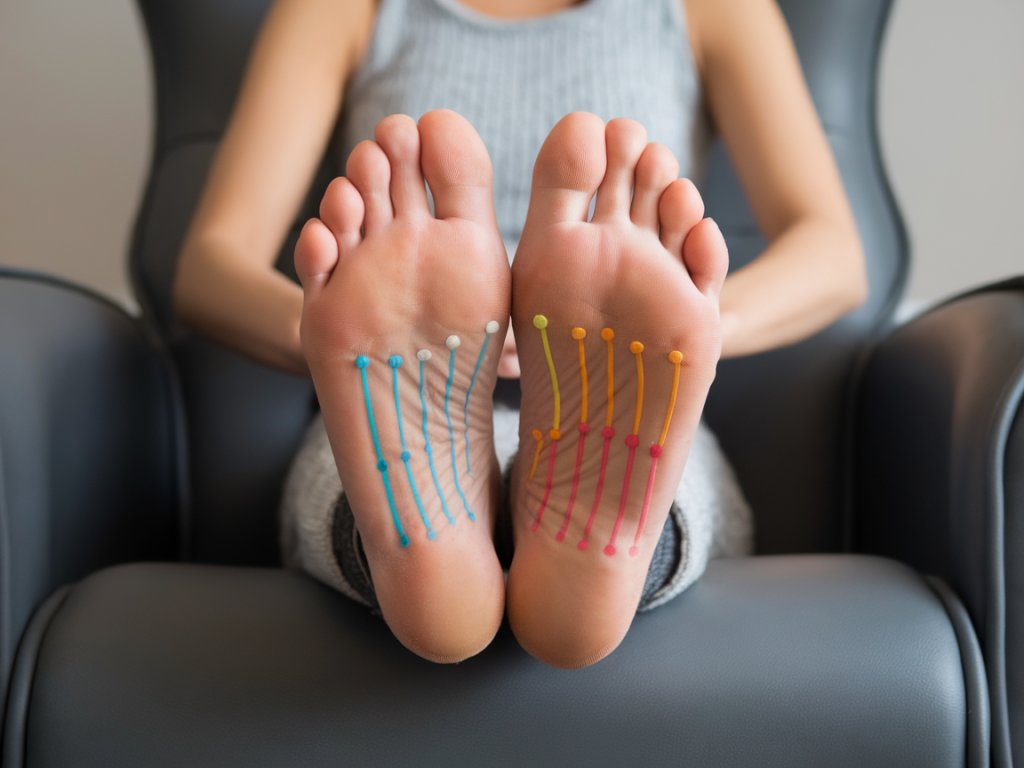
Perimenopause can feel like a slow, disorienting storm — sleep shifts, hot flushes, mood swings, brain fog and changes to digestion and energy all arriving at different times. Over the years I’ve worked with many people navigating this transition, and reflexology has become one of my favourite complementary tools to help reduce intensity and restore a sense of balance. In this article I’ll share targeted reflex points, simple self‑care routines you can do at home, and practical guidance on when to seek additional medical support.
Why reflexology can help in perimenopause
Reflexology is a gentle, non‑invasive approach that works through the feet (and sometimes the hands) to encourage relaxation and stimulate the body’s innate regulatory systems. Because perimenopause involves hormonal fluctuations that affect sleep, nervous system reactivity, circulation and digestion, a calming modality that supports the nervous system can ease symptoms.
In my practice I combine classical reflexology with mindful breathing and small lifestyle adjustments. This is not a cure for hormonal change, but it often helps people feel more grounded, sleep better, experience fewer hot flushes and manage anxiety or irritability more readily.
Key reflex points to target for perimenopause
Below are the most useful reflex points I use in sessions and teach clients for self‑care. You can work these on yourself, focusing on gentle, consistent stimulation rather than force.
- Endocrine point (on the sole, near the centre): supports hormone regulation by connecting to the pituitary and hormonal pathways.
- Thyroid area (base of big toe): useful for energy, metabolism and mood regulation.
- Adrenal glands (above the inner arch): helps manage stress response and fatigue.
- Solar plexus (centre of the foot, just below the ball): a calming point for nervous system tension and anxiety.
- Ovarian/uterus reflexes (outer edges of the sole and heel): connected to reproductive organ comfort and pelvic balance.
- Insular area / brain‑stem connection (big toe tip and surrounding area): for mood and sleep regulation.
- Spine reflex line (inside edge of the foot): addresses back tension and general nervous system tone.
How to find and work the points
Start sessions by creating a calm environment — sit comfortably, reduce distractions, and take a few slow breaths. I often recommend using a small amount of warm, unscented oil or an easily absorbed balm (Neal’s Yard’s Geranium or a simple jojoba oil work well) so your thumbs glide smoothly.
For each point:
- Locate the area with your thumb or forefinger, applying gentle pressure.
- Use small circular motions or a steady pressure for 1–2 minutes per point.
- Keep your breath slow and even — exhale as you press, inhale as you release.
- If a point feels tender, hold softer pressure and breathe into the sensation; sharp or increasing pain is a sign to stop or lighten touch.
Work both feet; asymmetry is normal, so don’t worry if one side feels different. Aim for 10–20 minutes total for a self‑care mini‑session, or 45–60 minutes for a deeper practice. Frequency can be daily or several times a week depending on your schedule and how you respond.
Example self‑care routine (10–15 minutes)
- Warm the feet with a few minutes of gentle stroking and light massage.
- Spend 1–2 minutes on the endocrine point on each foot using small circles.
- Work the adrenal reflexes with steady thumb pressure for 1 minute each side.
- Press the solar plexus point for 1–2 minutes while practising 4‑6 slow breaths per minute.
- Gently stimulate the thyroid area on the big toes (30–60 seconds each).
- Finish with a few long, soothing strokes from toes to heel and a mindful body scan.
When reflexology may ease specific symptoms
- Hot flushes and night sweats: regular work on the endocrine, solar plexus and adrenal points alongside paced breathing can reduce frequency and intensity.
- Sleep disruption: the insular/brain‑stem area and solar plexus are useful before bed; pair with a consistent pre‑sleep routine (no screens, herbal tea like chamomile).
- Mood swings and anxiety: adrenal and endocrine points plus slow diaphragmatic breathing help modulate the stress response.
- Digestive changes: reflexes for the abdomen and colon on the sole can support motility and comfort.
- Low energy: thyroid and adrenal stimulation, combined with gentle movement and balanced meals, can improve vitality.
Practical tips and lifestyle complements
Reflexology works best alongside simple, evidence‑informed self‑care:
- Sleep hygiene: cool bedroom, consistent bedtime, low screens before sleep.
- Nutrition: regular protein, wholegrains, healthy fats, and foods rich in calcium and magnesium; consider an omega‑3 supplement if advised by your GP.
- Hydration: water and herbal teas; limit caffeine if it worsens flushes or sleep.
- Movement: gentle daily activity — walking, yoga or tai chi to support circulation and mood.
- Stress management: short daily practices (5–10 minute breathing, grounding exercises) make reflexology more effective.
When to be cautious and when to see a professional
Reflexology is safe for most people, but there are some precautions. Avoid deep work over active blood clots, open wounds or severe foot infections. If you’re pregnant, have severe circulatory issues or a recent fracture, check with your healthcare professional first.
If perimenopausal symptoms are severe — for instance, very heavy bleeding, sudden mood changes, suicidal thoughts, or symptoms affecting daily functioning — see your GP or a specialist. Reflexology can be a complementary support but not a replacement for medical investigation or treatment.
What I offer in clinic and recommended products
In my Southwest London clinic I blend targeted reflexology with guided breathing and personalised self‑care plans. Sessions are tailored — short focused treatments for immediate relief, or longer restorative sessions to deepen relaxation. I sometimes recommend tools to enhance home practice: a small wooden reflexology stick for precise stimulation, a good quality foot balm (I use and often recommend Neal’s Yard Rejuvenating Foot Balm in clinic), and a lightweight foot cushion for comfortable positioning.
| Point | Location | Primary benefit |
|---|---|---|
| Endocrine | Sole centre | Supports hormonal balance |
| Adrenals | Inner arch | Reduces stress and fatigue |
| Solar plexus | Below ball of foot | Calms nervous system |
| Thyroid | Base of big toe | Energy and metabolism |
If you’d like a tailored routine or to learn these techniques in person, I offer workshops and one‑to‑one sessions locally. Small, consistent actions — a few minutes of reflexology, combined with breathwork and better sleep habits — can make the perimenopause transition more manageable and less isolating.