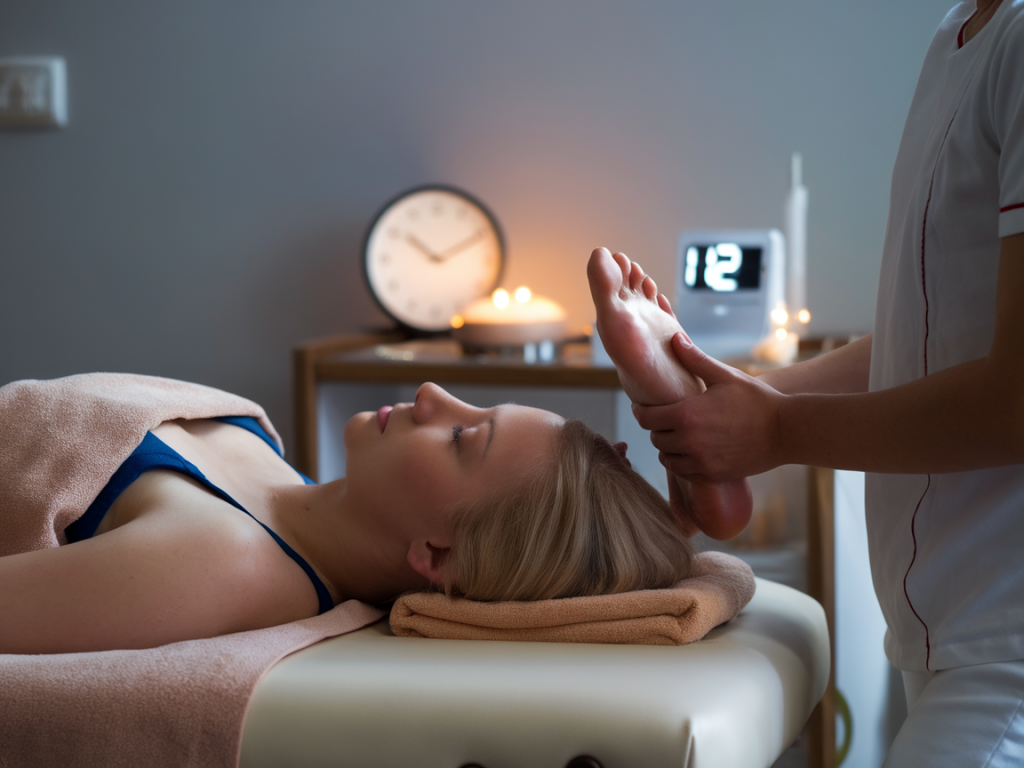
I’ve worked with many clients who tell me they’d prefer to avoid painkillers during their period if possible. Over the years I’ve found that a short, focused reflexology routine can make a real difference for many people — reducing cramp intensity, calming tension, and helping the nervous system shift out of a fight-or-flight response. Below I share a practical 12-minute reflexology sequence you can use at home. It’s gentle, evidence‑informed and easy to fit into your routine when cramps begin or when you want to be proactive.
Why reflexology can help menstrual cramps
Reflexology works by stimulating specific areas on the feet that correspond to organs, nervous pathways and muscle groups. The practice supports relaxation, improves local circulation and can modulate pain perception through activation of the parasympathetic nervous system. While reflexology is not a replacement for medical care, many people experience meaningful symptom relief, including reduced period cramps, when they combine reflexology with other self‑care strategies like heat, hydration and mindful breathing.
Before you begin — safety and preparation
Keep this in mind before starting the sequence:
How the 12-minute sequence is structured
The routine is divided into short focused passes so you can track time easily. You’ll work both feet; each pass lists the technique, duration and a simple cue to guide pressure. Aim for comfortable, steady pressure — enough to feel but not to cause sharp pain. If you’re sore, ease off.
Sequence (12 minutes)
Start with the left foot or whichever foot feels more tender. Use a stopwatch or the timer on your phone.
Sit comfortably, take three slow breaths. Apply oil to the foot. Use both hands to make long, warming strokes from the toes to the heel (effleurage) to encourage relaxation and circulation. Keep pressure light and even.
Gently hold the big toe between thumb and index finger. Make small clockwise rotations for 45 seconds, then counter‑clockwise for 45 seconds. The big toe reflex is connected to the head and hormonal balance; this is calming and helps regulate the nervous system.
Using the pad of your thumb, press gently into the center of the foot just below the ball (around the diaphragm/solar plexus reflex). Apply steady pressure for 15 seconds, then small circular motions for 30 seconds. Repeat three times. This area calms the nervous system and helps release tension held in the upper abdomen and chest.
Locate the reflex area for the pelvic region: on the inside edge of the foot, between the heel and the arch, roughly at the midpoint. Use your thumb to make slow, rhythmic pushes along this inner edge for 1.5 minutes. Imagine drawing a gentle line from heel toward the base of the big toe, repeating slow strokes. Pressure should be firm but comfortable — think of a pleasant massage rather than digging in.
The lower back reflex is along the inner border of the sole near the heel. Use your thumb to apply circular pressure across this region for 90 seconds. Many people hold tension in the lower back during cramps; this helps release muscular tightness and can reduce referred pain.
Just above the heel center on the sole sits the kidney reflex. Use a relaxed but pointed thumb pressure — press for 10 seconds, then make 3 small clockwise circles, repeat this pattern across the area for a minute. Supporting kidney reflexes helps detox pathways and fluid balance, which can be helpful during menstruation.
Gently hold the foot with one hand and support the ankle with the other. Rotate the ankle slowly clockwise and then counter-clockwise for 30 seconds each direction. Mobility here reduces stiffness and encourages a sense of release through the lower limb.
Use the thumb to knead the area of the arch (towards the inner arch for spleen/intestinal reflexes) for one minute. Digestive comfort often influences period pain; improving local circulation can ease cramps and bloating.
Place your thumb at the base of the toes, and using light sweeping strokes work across from the big toe base to the little toe base. This soothes pelvic and lower abdominal reflexes and also improves overall foot relaxation.
Finish with a gentle hold: cup the heel and give three long, slow compression releases — press with gentle pressure in, hold 3–4 seconds, then release. End with a calming breath.
Timing and frequency
You can use this 12‑minute sequence at the very first twinge of cramping or when pain peaks. For many clients I work with, doing this routine once every 4–6 hours during a heavy day helps. On lighter days, once in the morning and once in the evening is often enough. If you have time, repeat the sequence on both feet; if you only have one foot’s worth of time, do the sequence on the foot that feels most tender.
Complementary tips
For better results pair reflexology with these simple self‑care steps:
When to seek medical advice
Reflexology can significantly ease period discomfort for many, but persistent, heavy or increasingly severe cramps should be evaluated by a healthcare professional. Conditions like endometriosis, fibroids, adenomyosis or pelvic inflammatory disease require medical assessment and may need additional treatment beyond self‑care.
Products I often recommend
For a simple home kit, I suggest:
If you’d like more support, I offer tailored sessions and workshops in Southwest London where I teach this sequence and variations you can use for different symptoms. You’ll find session details and booking information at https://www.reflexologysouthwestlondon.co.uk.
If you try the sequence, I’d love to hear how it worked for you — what felt helpful and what you’d like to adjust. Reflexology is highly personal, and with small tweaks the same sequence can become exactly the kind of relief you need on difficult days.