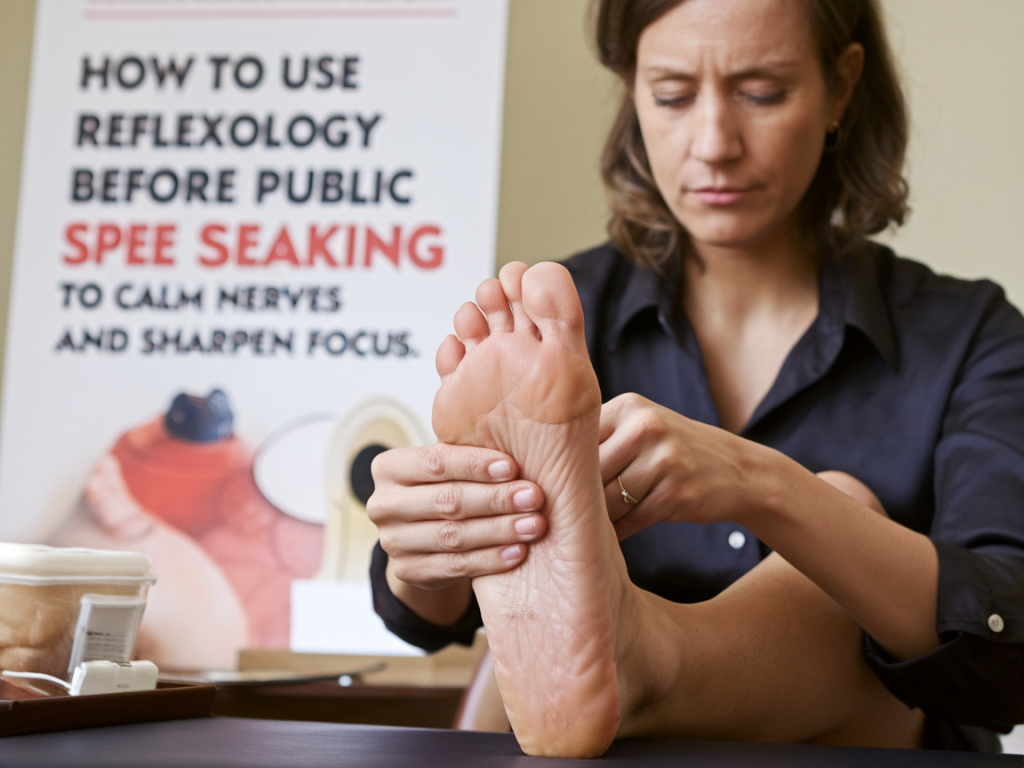
Standing in front of an audience can quicken the pulse, make your hands damp and your mind race. Over the years I’ve worked with clients who dread presentations and performers who need to be razor‑sharp on stage. Reflexology is a gentle, practical tool I often recommend to calm the nervous system, release tension and sharpen mental focus just before speaking. Below I share simple, evidence‑informed techniques and a short reflexology routine you can use in the minutes or hours before a talk — no experience required.
Why reflexology helps with public speaking
Reflexology is not a magic switch that removes stage fright overnight, but it does influence the body’s relaxation response. By working on reflex points on the feet (or hands), we stimulate the parasympathetic nervous system which can slow heart rate, reduce muscle tension and promote clearer thinking. In practical terms, that means calmer breathing, steadier hands and improved attention — all things that make public speaking easier.
I combine reflexology with mindful breathing and a few grounding strategies. These simple, consistent practices help manage the body's stress response and prime your mind to perform.
When to use reflexology before speaking
Timing matters. Here are three useful windows:
- Hours before: A 30–45 minute reflexology session (or a professional treatment) helps settle overall nervous-system tone and lowers baseline anxiety.
- 30–60 minutes before: A 10–20 minute self‑administered foot routine reduces acute nerves and improves concentration.
- 5–10 minutes before: A brief 3–5 minute hand or foot routine combined with breathwork acts as a reset if anxiety peaks just before you go on stage.
Quick pre‑speech routine (5–10 minutes)
This is a short, repeatable routine to use in the green room or backstage. It targets calming reflex points and includes breathwork to stabilise your nervous system.
- Find a quiet seat and remove your shoes. If you can’t, use your hands instead.
- Take three slow, full diaphragmatic breaths: inhale for 4 counts, hold 1–2, exhale for 6–8 counts.
- Using your thumb, apply gentle pressure to the centre of the pad beneath your big toe (the head/brain reflex). Hold for 20–30 seconds, breathing steadily.
- Move to the inner edge of the foot along the arch (the diaphragm and solar plexus reflex). Use circular thumb motions for 20–30 seconds.
- Gently press the area beneath the ball of the foot (heart reflex) for 15–20 seconds, then the centre of the heel (root zone) for grounding.
- Finish with slow, relaxing strokes along the top of the foot towards the toes to encourage circulation and release residual tension.
Hand routine for discreet moments
If you can’t take your shoes off, hands are a discreet and effective alternative. I often teach this to clients who need something portable and quick.
- Begin with the same breath pattern: inhale 4, hold 1–2, exhale 6–8.
- Use the thumb of one hand to apply steady pressure to the pad of the opposite thumb (brain/head reflex). Hold 15–20 seconds and switch hands.
- Massage the base of the little finger (shoulder/neck reflex) using small circular motions for 20 seconds on each side.
- Finish by pressing and smoothing the webbing between thumb and index finger (a calming point) for 15 seconds per hand.
How hard should you press?
Pressure should be firm but comfortable. Aim for a sensation of mild resistance without pain. If you feel sharpness, ease off. In a clinical session I adjust pressure to a client's sensitivity; at home, keep it gentle and steady. Use a small amount of oil or balm if your skin is dry — jojoba or sweet almond oil absorbs nicely and helps glide without slipping.
What reflex points to prioritise
When time is tight, focus on these key zones:
- Head/brain reflex (big toe/thumbnail area) — calms busy thoughts and supports mental clarity.
- Solar plexus/diaphragm area (centre of foot near the arch) — helps regulate breath and reduce panic sensations.
- Heart zone (ball of foot under toes) — soothes emotional intensity and helps steady the voice.
- Root zone (heel) — grounds and reduces jitteriness.
Combining reflexology with breathing and grounding
Reflexology works best when combined with breath and body awareness. Try this micro‑protocol:
- Sit with both feet flat on the floor or hold one foot in your lap.
- Perform a 3‑breath box: inhale 4, hold 4, exhale 4, hold 4. Repeat three times.
- Follow with the 5‑minute foot routine above. Keep attention on sensations rather than thoughts — this anchors your focus.
What to expect after a self‑session
Most people report feeling calmer, with slower breathing and a clearer head within minutes. Some experience a wave of tiredness — that’s normal and a sign the parasympathetic system is activating. If this happens shortly before you speak, rest for a few minutes and sip water; the slight drop in arousal often improves performance by reducing rumination and overthinking.
Practical tips and kit suggestions
Here are small items I recommend keeping in your speaker kit:
- A travel‑size natural oil (jojoba, sweet almond or a light massage oil) for smoother thumb work.
- A soft foot roller (Bamboo or silicone) for quick rolling under the arch when you’re on a break — brands like MARNUR or OPTP make compact rollers.
- A small notebook with a breathing cue written down (for example: "In 4 — Hold 1 — Out 6").
- A pair of thin, breathable socks if you want to work on feet discreetly without removing shoes.
When to seek a professional session
If stage fright is overwhelming or persistent, a series of reflexology sessions can lower your general stress baseline and teach personalised routines. In a longer session I can combine reflexology with relaxation coaching, guided breathwork and practical rehearsal strategies to build long‑term confidence.
Reflexology is a practical, portable tool in your public‑speaking toolkit. It won’t replace practice or content preparation, but it will help regulate your body so your mind can perform — calmer, clearer and more present.