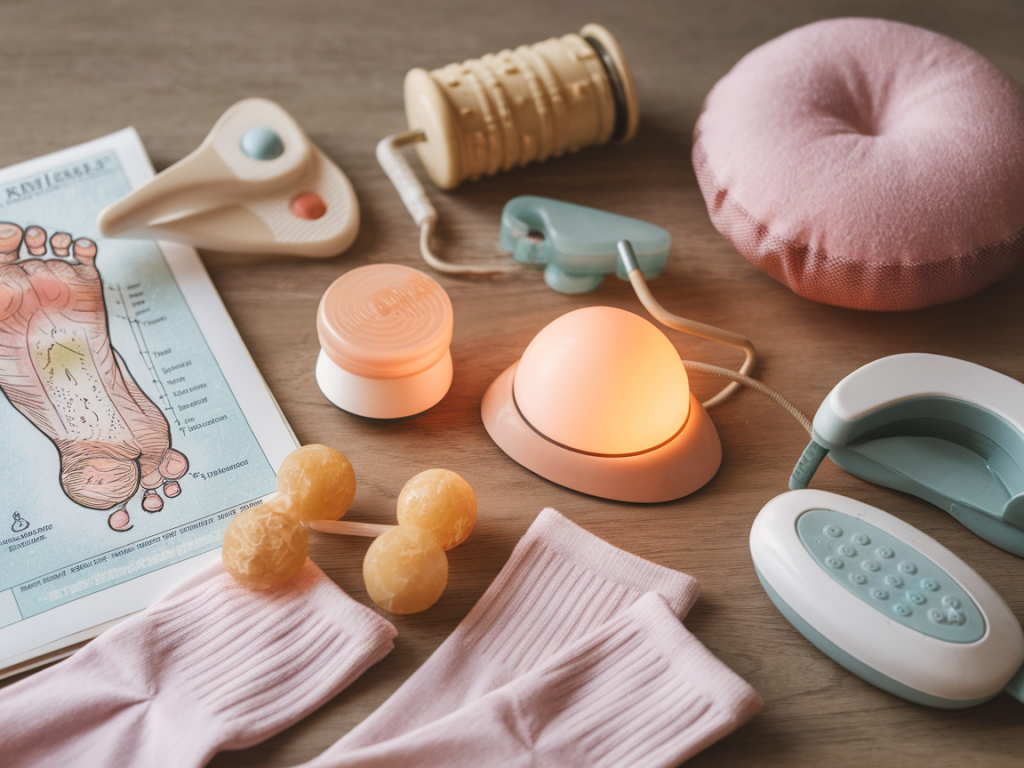
I often get asked: “What reflexology tools or little props should I try at home?” My short answer is usually: less is more, but a few simple items can genuinely support your practice — whether you’re doing reflexology on yourself, moving towards a daily foot routine, or adding gentle stimulation between sessions. Below I share what I use, what I recommend to clients in Southwest London, and what I find actually helps versus what’s more of a gimmick.
Why use tools at all?
Reflexology is fundamentally hands‑on and responsive; your thumbs, fingers and touch are the primary instruments. Tools are not replacements, they’re supports. They can:
- help target particular reflex points when your hands are tired;
- encourage gentle stimulation when you want to do a short, effective self‑care routine;
- provide sensory variation (pressure, rolling, heat) that can deepen relaxation;
- make reflexology more accessible to people who can’t bend easily to reach their feet or who have reduced hand strength.
Simple, reliable must‑have props
These are inexpensive, easy to find, and I recommend them to most clients first.
- Wooden reflexology stick — a short, rounded wooden stick (also called a probe) is brilliant for applying steady, precise pressure on reflex points. I favour ones with a smooth, slightly rounded tip; avoid anything sharp. They’re especially useful around the arch and under the toes.
- Rubber massage ball (2–6 cm) — a dense, grippy ball like those from TriggerPoint or simple lacrosse balls work well. Roll under the foot for plantar fascia relief, or press into specific spots to release tension. Balls offer a firmer, more even pressure than fingers.
- Foot roller — silicone or wooden rollers give broad stimulation across the sole. I keep a small, textured roller in my clinic and a softer one at home. Use for 2–5 minutes per foot as a warm‑up before working more deliberately on points.
- Toe separators / spacers — inexpensive silicone spacers help when toes are tight or overlapping; they create space to access toe reflexes more easily and can be used briefly during your routine.
- Small towel or bolster — elevating the foot slightly on a folded towel improves comfort and access, particularly for older adults or anyone with restricted mobility.
Props that add a therapeutic dimension
These tools bring heat, vibration or deeper tissue work into a simple home practice. I suggest them for people who already have a short, effective manual routine and want to extend it.
- Warm foot soak basin — a shallow basin for warm water with Epsom salts or a few drops of essential oil (lavender, sweet orange) can be a calming prelude to reflexology. Heat increases local circulation and relaxes the muscles, making point work more receptive.
- Electric foot massager (roller or shiatsu) — brands like HoMedics or Beurer make compact devices that combine rolling and vibration. They’re not a substitute for manual reflexology but are useful for daily maintenance, especially for busy professionals or parents who want 10–15 minutes of consistent stimulation.
- Vibrating massager or mini percussion device — small handheld vibrators can be used briefly on the plantar surface to increase circulation and soothe tight tissue. Keep intensity low and avoid using directly on fragile skin or varicose veins.
Tools I rarely find useful
There are many novel gadgets on the market; most are fine if they bring you pleasure, but they often don’t add much specific reflexology benefit. Examples I caution against:
- excessively hard metal rollers — too sharp and likely to bruise soft tissue;
- overly complex machines promising “reflex point detection” — their algorithms are rarely validated and can give false reassurance;
- strong electronic stimulators without professional guidance — these can cause discomfort if used incorrectly.
Practical routines with tools (three short sequences)
Below are simple, reproducible mini‑routines you can use at home. Each takes 5–15 minutes and pairs a tool with hands‑on techniques.
Quick morning wake‑up (5 minutes)
- Warm your feet briefly under lukewarm water or with a warm towel for 30 seconds.
- Use a small roller across the sole: 1 minute back and forth, focusing on the heel and arch.
- Finish with circular pressure using the wooden probe along the inner arch for 30 seconds per foot.
Midday tension release (10 minutes)
- Sit comfortably and place a rubber massage ball under your foot. Roll slowly from the heel to the base of the toes for 3 minutes each foot.
- Use thumbs to glide along the outer edge of the foot and apply sustained pressure to any sore spots for 20–30 seconds.
- End with 1 minute of toe stretches and gentle wringing between the fingers.
Evening relaxation (15 minutes)
- Begin with a 5‑minute warm soak (optional: a teaspoon of Epsom salts and 3 drops lavender).
- Use a soft foot roller for 4 minutes, then apply slow thumb walking across the plantar surface for 5 minutes, focusing on the diaphragm area (ball of foot) and the pelvic reflexes (inner arch).
- Finish with 1–2 minutes of gentle rocking and breath‑focused relaxation — exhale slowly as you soften pressure.
Buying tips and hygiene
When choosing tools, look for:
- durable, smooth surfaces (no rough edges);
- non‑porous materials for easy cleaning (silicone, hardwood with a sealant, medical‑grade plastic);
- compact size that fits your hand and foot comfortably.
Clean tools after each use with warm soapy water and dry thoroughly. If you use a shared electric massager, follow the manufacturer’s cleaning guidelines and consider covering contact areas with a washable cloth.
When to avoid tools or adapt
Avoid strong mechanical stimulation if you have:
- acute foot injuries, open wounds or recent surgery;
- deep vein thrombosis, uncontrolled diabetes with neuropathy (check with your clinician first);
- severe peripheral neuropathy — very light touch is safer.
When in doubt, adapt pressure, use softer tools, or consult a qualified reflexologist. In my local practice in Southwest London I often demonstrate safe intensity and positioning so clients can continue at home with confidence.
Final practical note
Tools are most effective when used mindfully. Set aside uninterrupted time, focus on breath, and check in with how your body responds. A simple rubber ball and a wooden probe, used with care, can be surprisingly effective. If you’d like personalized guidance on choosing props that suit your needs — or a short clinic session to learn a tailored home routine — I offer practical demonstrations and workshops here at Reflexology Southwest London Co and on my local listings at https://www.reflexologysouthwestlondon.co.uk.