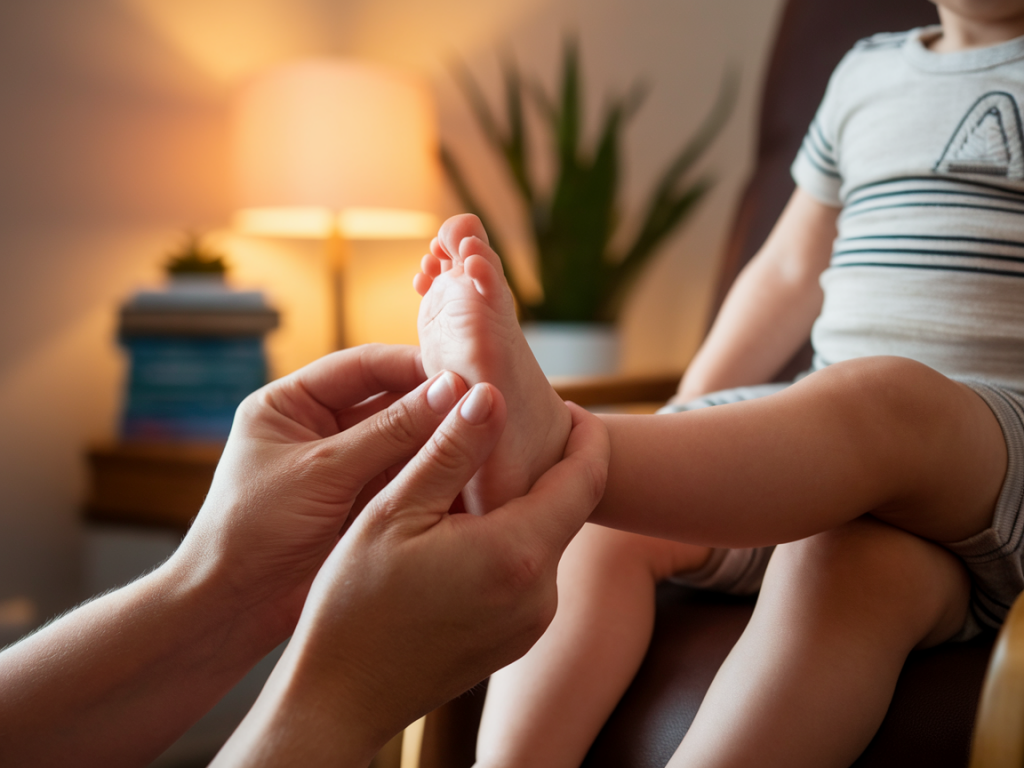
Helping toddlers settle for sleep is one of those small, tender challenges that can feel huge at 10pm. Over the years working with families in Southwest London, I’ve developed a simple, gentle reflexology routine you can use at home — no special training required. Below I share a step‑by‑step routine, safety guidelines, timing suggestions and a few product tips. Everything here is designed to be rhythmical, reassuring and safe for little ones (generally 1–4 years old). If your child has specific health issues, always check with your paediatrician first.
Why reflexology for toddlers?
Reflexology is a non‑invasive, touch‑based approach that uses gentle pressure on feet (and sometimes hands) to encourage calm and balance. For toddlers, the benefits are often immediate: a slower breath, softer muscles, and a sense of being soothed and attended to. It’s not a cure‑all, but when used consistently as part of a bedtime routine it can help signal the nervous system that it’s time to wind down.
What I love about this approach for parents is that it’s practical, quick, and relational — you’re not only applying techniques but also creating a calming interaction that supports attachment and security.
Safety first: important considerations
- Gentle touch only: For toddlers use light, steady pressure — think of the touch you’d use to stroke their hair, not the pressure for an adult. If the child flinches or pulls away, ease off immediately.
- Avoid during illness or fever: If your child has a high temperature, contagious illness, or open skin wounds on feet/hands, skip the routine until they’ve recovered.
- Medical conditions: If your child has diabetes, circulatory problems, deep vein issues, or recent fractures, consult a healthcare professional before trying reflexology.
- Contraindicated areas: Avoid deep pressure on the spinal reflex zones if there is a recent spinal injury or severe back condition. For toddlers this is rarely an issue, but always be mindful of tenderness.
- Allergies and products: If you use oil or lotion, choose a hypoallergenic, fragrance‑free product suitable for babies and toddlers (eg. Weleda Calendula Baby Oil, Trilogy Baby Oil, or a simple fractionated coconut oil). Test a small patch on the ankle first.
Setting the scene
Create a predictable, cosy environment. Dim the lights, lower background noise and pick a comfortable place — a low bed, sofa or a soft rug. Keep the session short at first (3–5 minutes per foot) and aim for calm, rhythmic touches rather than choreography. I often invite parents to sing soft nursery rhymes or use a white noise app (like Calm or Noisli) to deepen the atmosphere.
Step‑by‑step reflexology routine for toddlers (5–10 minutes total)
Perform this routine about 10–20 minutes before bedtime as part of the wider wind‑down habit (bath, story, cuddle). I describe the pressure as light — gentle, reassuring strokes and small thumbs presses. Keep your breathing slow and let your voice be low and steady as you work.
- Start with a connection: Sit where you’re comfortable and hold your child’s foot in both hands for about 30 seconds. Use slow, grounding breaths together — inhale for four, exhale for four. This helps signal safety.
- Warm the foot: Rub your hands together or apply a small drop of oil to your palms and gently glide over the sole to warm the area. Make long, soothing strokes from heel to toes (3–5 passes).
- Heel strokes (calming nervous system): Using the flat of your thumb, make gentle strokes across the heel in a horizontal direction. Repeat 4–6 times, keeping the movement slow and consistent.
- Arch sweep (digestion and overall calm): With your thumb or index finger, sweep up the inner arch from heel to ball in one long motion, then sweep back along the outer edge. Repeat 3 times. For toddlers this often feels like a gentle caress and helps settle tummy tension.
- Toe attention (head/brain points): Cradle the toes and, one by one, very gently stroke from the base to the tip. You can softly roll each toe between thumb and forefinger. Keep it playful and slow — some toddlers enjoy a little giggle here.
- Ball press (breath and chest area): Place your thumb on the ball of the foot (below the toes) and hold a light, steady pressure for 4–6 breaths. Keep your hand relaxed and connected.
- Outer margin sweep (release): Using a light sweeping motion, run your thumb along the outer edge of the foot from little toe towards heel 3 times. This helps finish the session and release any remaining tension.
- Finish with a hug: End by holding both feet in your hands and giving two slow, gentle squeezes like a hug. Whisper a short reassurance or favourite bedtime phrase, then tuck them in.
Timing and frequency
Start with 3–5 minutes per foot. If your toddler enjoys it, you can extend to 10 minutes per foot. Consistency is the key — short daily sessions are usually more effective than infrequent long ones. Use it as part of your evening ritual rather than a standalone fix; the ritual cues the nervous system that it’s time for sleep.
What to expect during and after a session
- Immediate: calmer breathing, softer limbs, possible yawns.
- Short‑term: easier settling into bed, fewer mid‑night wake ups for some children.
- Longer‑term: improved sleep consistency when combined with good sleep hygiene (regular bedtime, low stimulation, comfortable sleep environment).
Practical tips for busy parents
- If your toddler resists, try a shorter “one foot only” version or make it a game — use a puppet or sing a short verse for each stroke.
- Use a favourite blanket or toy to maintain calm. The goal isn’t perfect technique but steady, loving presence.
- Keep sessions flexible — if nap time or afternoon quiet time works better, that’s fine. The ritual matters more than the clock.
Quick reference table
| Duration | 5–10 minutes total (3–5 minutes per foot to start) |
| Pressure | Very light — like stroking hair |
| Frequency | Nightly for best results; can be used at naps |
| Products | Hypoallergenic baby oil (Weleda Calendula, Trilogy Baby Oil) or fractionated coconut oil |
If you’d like to learn these techniques hands‑on, I run short parent workshops in Southwest London where I demonstrate safe, playful approaches for toddlers and answer individual questions. You can find session details and book on my site at reflexologysouthwestlondon.co.uk. I aim to make reflexology accessible and manageable for busy families — one calm, gentle touch at a time.