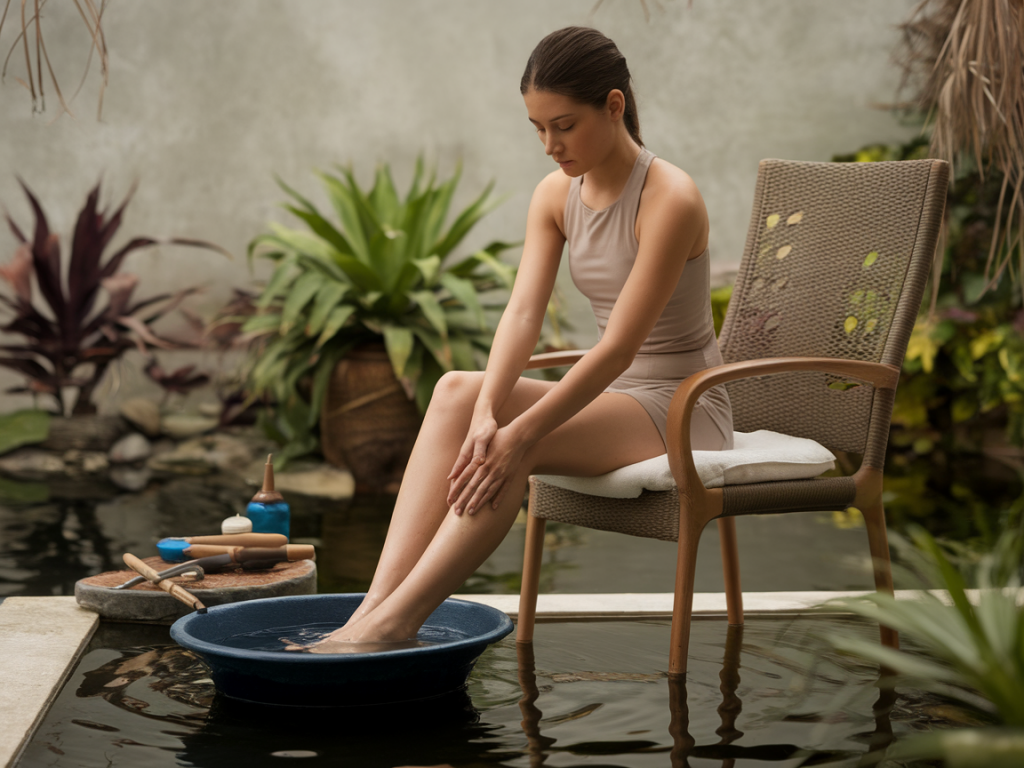
Late-night sugar cravings are one of the most common complaints I hear from clients — especially those juggling busy days, parenting, shift work or stress. Over the years I’ve tested short, practical techniques on myself and with clients, and one approach that keeps coming up is a deliberately short foot reflexology routine you can do in under five minutes. But can five minutes really make a difference? In my experience: yes — often enough to stop a craving in its tracks, or at least to give you the space to make a calmer, healthier choice.
Why a short foot reflex routine can work
Reflexology is about more than poking pressure points on the feet. The benefits come from a combination of physiological and psychological effects:
All of these together explain why even a brief, intentional practice can reduce the urge to raid the biscuit tin.
What the evidence says
Scientific research directly linking reflexology to reduced sugar cravings is limited. However, there is broader evidence that short relaxation and mindfulness practices reduce impulsive eating, emotional eating and stress‑related cravings. Studies show that activating the relaxation response lowers cortisol and can improve decision‑making — both relevant to late‑night snacking.
In practice, this means that reflexology doesn’t need a bespoke clinical trial to be useful: it can act as an effective behavioural tool when integrated with mindful awareness and small lifestyle tweaks.
A simple 5‑minute foot reflex routine to try tonight
This routine is designed for late evening: calming, grounding and targeted to areas commonly linked with cravings. Do it seated or lying down with your feet supported. Use a little oil or balm (I like a light lavender massage oil or Weleda Skin Food for dry feet) to allow smooth movements.
| Step | Where to focus | Time |
|---|---|---|
| Settling breath | Whole body, ground through feet | 30 seconds |
| Thumb walk across the toes | Toes (head and eye reflexes + stress release) | 30 seconds per foot |
| Pancreas area massage | Arch of the right foot (just below ball) | 40 seconds per foot |
| Solar plexus point pressure | Centre of the foot where the arch is most prominent | 30 seconds total |
| Heel grounding presses | Heels | 30 seconds per foot |
| Closing breath + affirmation | Whole feet, gentle stroking | 30 seconds |
Notes on technique:
When to use the routine
Timing matters. Try the five‑minute routine:
Combining reflex work with quick practical steps
When I teach this to clients I encourage pairing the routine with small, immediate strategies that make a real difference:
Common questions I hear
Will five minutes always stop a craving? No. Sometimes cravings are driven by real physiological needs — low blood sugar, inadequate calories earlier in the day, or untreated sleep deprivation. Use the routine as a first‑line tool; if it doesn’t work, try a small healthy snack and reassess your daytime habits.
Is this safe if I have diabetes? Gentle reflexology is generally safe, but don’t use it as a substitute for medical care. If you have diabetes or other metabolic conditions consult your healthcare provider before relying on reflexology for blood sugar control.
Do I need special oils or tools? No. A little carrier oil (almond, jojoba) helps hands glide. Tools like a rubber massage ball, reflexology stick or a small wooden tool can be useful if you have hand pain.
How I integrate this into my practice
When I work with clients who struggle with late‑night snacking I teach a short routine like the one above and ask them to practise it for at least two weeks. Behaviour change often needs repetition: the first few times may feel awkward, but after a week the routine becomes a familiar pause that helps break automatic impulses. Many clients report fewer episodes or that the urge passes within a few minutes — exactly the window you need to make a different choice.
If you’d like a guided version, I sometimes include a short audio track in my workshops and one‑to‑one sessions so people can practice at home. If you prefer visuals, a quick video demonstration can help with the thumb‑walking technique and timing.
Try the routine tonight and notice what changes — not just in your eating, but in how you feel afterward. Small, consistent rituals can be powerful. If you find it helps, I’ll share variations for travel, shift‑work nights and parents short on time.