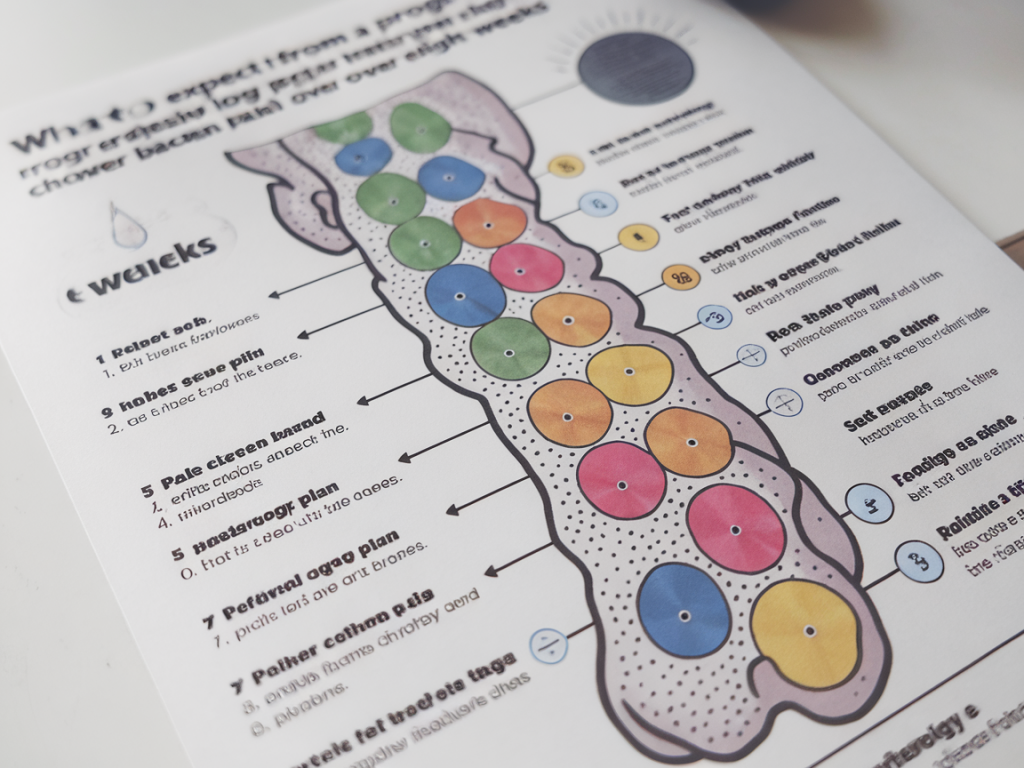
When a client comes to me with chronic lower‑back pain, they often want to know what a course of reflexology will actually look like — week by week, and in terms of realistic outcomes. I’ve designed progressive eight‑week plans for many people, and over time I’ve learned what helps most: a steady build of targeted sessions, simple home practices, and realistic goal‑setting. Below I describe what I typically do and what my clients can expect, so you can decide if this approach might work for you.
How I structure an eight‑week progressive plan
My aim is to reduce pain and tension while increasing resilience and mobility. The structure is simple: two shorter sessions in week 1 to establish baseline and immediate relief, then weekly sessions for the following seven weeks. Each in‑clinic session lasts 45–60 minutes depending on needs. Between sessions, I give short daily self‑care routines to reinforce the work.
| Week | In‑clinic focus | Home practice | Typical outcome |
|---|---|---|---|
| 1 (days 1 & 4) | Assessment, pain mapping, gentle reflexology to calm nerves | 5–10 min nightly foot routine + breathing practice | Immediate reduction in acute tension, clearer pain pattern |
| 2 | Release of the lumbar reflex zones, pelvic and sciatic work | Mini reflex sequence + hip mobility stretch | Less stiffness, improved morning mobility |
| 3 | Focus on lymphatic and adrenal reflexes to support recovery | Hydration, 5‑minute foot massage & diaphragmatic breathing | Better energy levels and reduced pain flares |
| 4 | Integrative session: nervous system regulation + guided relaxation | Progressive relaxation recording (10–15 min) | Improved sleep and coping with discomfort |
| 5 | Strengthening reflex points for core support and posture | Short core activation and foot mobilisations | Improved standing tolerance, less compensatory tension |
| 6 | Targeted work on trigger points reflecting in the feet | TriggerPoint foam rolling (glutes/hamstrings) 5–10 min | Decreased referral pain down legs |
| 7 | Consolidation: longer relaxation and self‑care coaching | 30‑min self‑care routine 3x/week | Greater confidence managing symptoms |
| 8 | Review, maintenance plan and relapse prevention | Tailored maintenance sequence + resources | Clear plan to continue improvement independently |
What I aim to achieve each week (and how progress looks)
I don’t promise a miracle disappearance of chronic pain, but a measurable change is realistic: less day‑to‑day flare‑ups, improved sleep, increased mobility and an enhanced ability to use movement as medicine. In week 1 most people notice an immediate calming effect and clearer mapping of where pain originates and radiates. By weeks 3–4, there’s often a reduction in pain intensity and fewer night‑time awakenings. By weeks 6–8 the focus shifts to consolidation and helping you use the skills you’ve learned to prevent relapse.
How reflexology helps with lower‑back pain
I work with reflex maps on the feet that correspond to the lumbar spine, pelvis, hips and associated musculature. The techniques I use include rhythmic thumb‑walking, gentle pressure holds on specific reflex points, and nervous‑system calming sequences. The effects I’m aiming for are:
Daily home practices I give clients
Consistency matters more than duration. I usually ask for 5–15 minutes per day of simple practices. Examples I recommend are:
How we measure progress
I use a combination of objective and subjective measures: pain rating scales (0–10), a simple functional checklist (can you bend to tie shoelaces, sit for 30 minutes comfortably, walk 1 km?), and qualitative notes on sleep, mood and energy. We review these each session so you can see real change — sometimes small but meaningful — and I can adapt the plan.
Safety, contraindications and when to refer
Reflexology is low‑risk, but it’s not suitable for every situation. I avoid deep pressure over open wounds, active infections, recent fractures, or deep vein thrombosis (DVT) risk areas. If you have severe neurological symptoms (numbness, progressive weakness, bowel/bladder changes), I’ll pause reflexology and refer you to a GP or physiotherapist immediately. I always work in partnership with other practitioners when needed.
Common questions I’m asked
Tools and resources I sometimes recommend
For home work I often suggest:
Throughout an eight‑week plan I encourage realistic expectations: chronic pain usually responds gradually. My role is to guide, to give you effective tools, and to support a steady recovery rooted in practical, evidence‑informed reflexology and mindful self‑care. If you’re considering a plan like this, bring your questions and any previous medical assessments to our first session so we can personalise the pathway together.