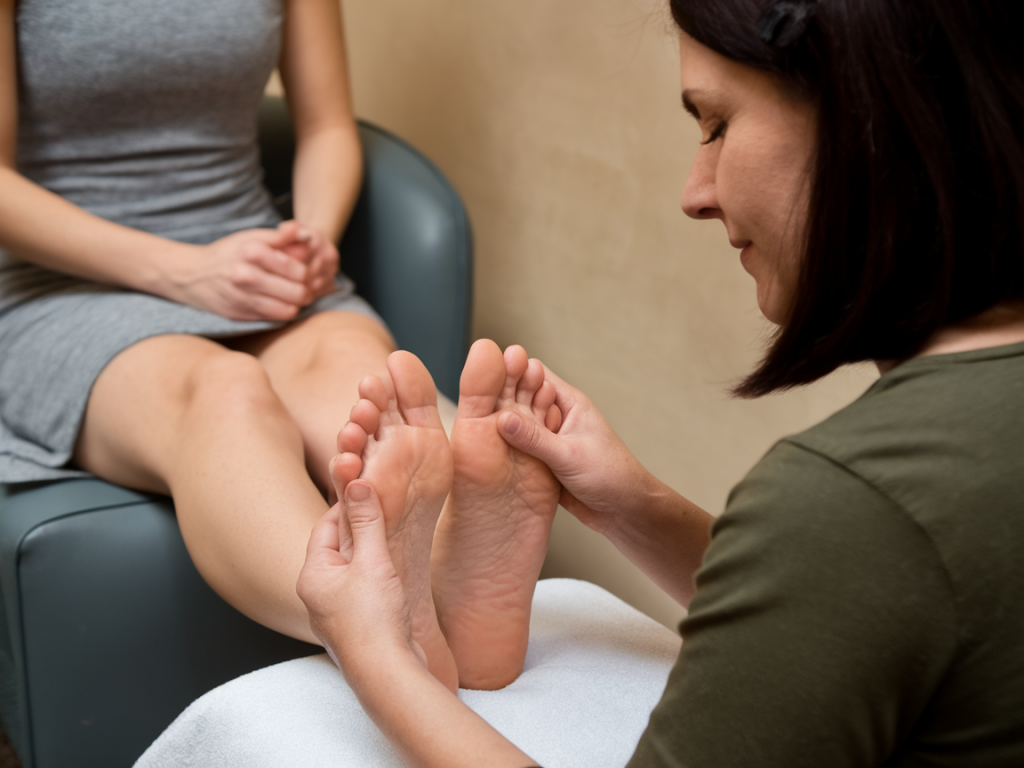
I often see people who come to a session with one common complaint: pain under the heel or along the arch — plantar pain that makes walking, standing or even getting out of bed uncomfortable. Over the years I’ve found that a gentle foot reflexology routine, combined with simple self-care, can offer meaningful relief between treatments. Below is a practical, at‑home sequence I use with clients, written in a way you can follow after a long day or as part of your morning routine. It’s gentle, evidence‑informed and designed to calm tension without aggravating an acute injury.
How reflexology helps plantar pain (briefly)
Reflexology doesn’t “fix” structural problems like a torn plantar fascia, but it can reduce tension, improve local circulation and soothe the nervous system. When we apply controlled pressure to the foot, we stimulate local tissues and nerves, which can help reduce pain signals, relax tight muscles and support healing by encouraging better blood flow. I combine this with simple stretching and self‑management tips so you get relief that lasts beyond the session.
Before you start: safety and precautions
Keep these points in mind before trying the sequence:
- If your pain is sudden or severe (for example, sharp tearing pain, swelling, bruising or inability to bear weight), see a healthcare professional before self‑treatment.
- Avoid deep pressure on an inflamed or acutely painful area — stay gentle. The aim is calming, not forceful manipulation.
- Pregnancy, blood clotting disorders, open wounds or active foot infections are reasons to check with a practitioner first.
- If you’re diabetic or have reduced foot sensation, be extra cautious and consult your clinician before trying new foot techniques.
What you’ll need
- A comfortable chair or stool and a small towel.
- A little massage oil or cream (almond oil, light coconut oil or a neutral massage cream). This reduces friction and makes slow, controlled movements easier.
- An optional tennis ball or soft lacrosse ball for complementary rolling work.
General guidance on pressure and rhythm
Work slowly and listen to your feet. Use the pads of your thumbs and fingers. Pressure should feel like a firm finger‑press, not a pain‑inducing squeeze. If it hurts, ease off. Aim for a calm rhythm — inhale for a gentle press, exhale while releasing. Sessions can be 10–25 minutes per foot depending on time and sensitivity.
Gentle reflexology sequence for plantar pain
Do the sequence on the less painful foot first to settle into the rhythm, then repeat on the more sensitive side. You can repeat daily or every other day depending on response.
- Warm‑up (1–2 minutes): Rub a little oil between your hands to warm it. Stroking each foot from toes to heel helps lengthen tissues and prepare the nervous system. Use long, light strokes along the top, then the sole.
- Toe loosening (1–2 minutes): Hold each toe between thumb and forefinger and gently rotate it small amounts clockwise and anticlockwise. This releases tension that can pull on the plantar fascia. Finish with a light traction — a small gentle pull.
- Ball of foot gentle compression (2–3 minutes): Using your thumbs, apply a slow, even pressure across the ball of the foot, moving from the base of the toes toward the midfoot. Pause on any tender spots for a few breaths, keeping pressure comfortable.
- Arch work with thumb walking (3–5 minutes): Support the foot with one hand. With the other, use thumb‑walking — a small, sequential pressing movement — along the arch from the base of the heel towards the ball. Keep movements short and rhythmic, about the width of your thumb each step. This technique gently stimulates the arch and surrounding tissues without deep stripping.
- Heel release (2–3 minutes): The heel is often sensitive with plantar pain. Use the heel of your hand or a slightly flattened thumb to make small circular motions around the heel pad. Keep pressure superficial at first and increase only if comfortable. Finish with a few gentle long strokes from midfoot to heel.
- Inner and outer edge sweep (2 minutes): With broad, light strokes, sweep from the medial (inner) edge of the foot to the lateral (outer) edge and back. This helps integrate the tissues and reduce local holding patterns.
- Calf and Achilles release (3–4 minutes): Plantar pain is often linked to tight calves. Support the ankle and use both hands to knead the calf muscle gently, then trace along the Achilles tendon with light thumb pressure. Finish with a few light pulls on the heel to encourage mobility in the tendon‑fascia chain.
- Soothing finish (1–2 minutes): End with feather‑light strokes from toes to heel, like a calming sweep. You can place a warm towel over the foot for a minute to maximise relaxation.
Complementary self‑care tips to speed recovery
- Footwear: wear supportive shoes with a slight heel and good arch support—avoid flat shoes like flimsy flip‑flops for long periods.
- Stretching: calf stretches against a wall (knee straight and bent variations) 3 times daily for 20–30 seconds each helps reduce load on the plantar fascia.
- Ice in early flare‑ups: 10–15 minutes of ice (wrapped in a cloth) can reduce inflammation—don’t apply directly to skin.
- Night splinting: if you wake with severe first‑step pain, consider a night splint that holds the ankle at 90°; check with a clinician for suitability.
- Short walks: avoid sudden increases in activity. Break up long standing periods and pace your walking to reduce strain.
Simple tools that can help
I often recommend these affordable aids to clients:
- Tennis ball or soft lacrosse ball — for gentle rolling under the arch (2–3 minutes, light pressure).
- Foam roller — for calf work.
- Supportive insole (e.g. Superfeet or other quality orthotic insoles) to reduce strain during the day.
When to seek professional help
| Signs | Consider |
|---|---|
| Severe sudden pain, swelling, bruising | Immediate medical assessment |
| Pain persists despite conservative care for several weeks | Physio, podiatrist or further imaging |
| Underlying health issues (diabetes, neuropathy) | Consult your healthcare provider first |
Practically, many clients report noticeable easing of discomfort within a few sessions of regular, gentle self‑care. Reflexology sessions with a trained practitioner can complement these self‑techniques — sometimes a short in‑person treatment helps identify patterns I can’t see at home. If you’d like a guided routine or tailored adjustments for your foot shape, tightness or activity level, I offer short follow‑up sessions and local workshops in Southwest London where we practise these techniques together.