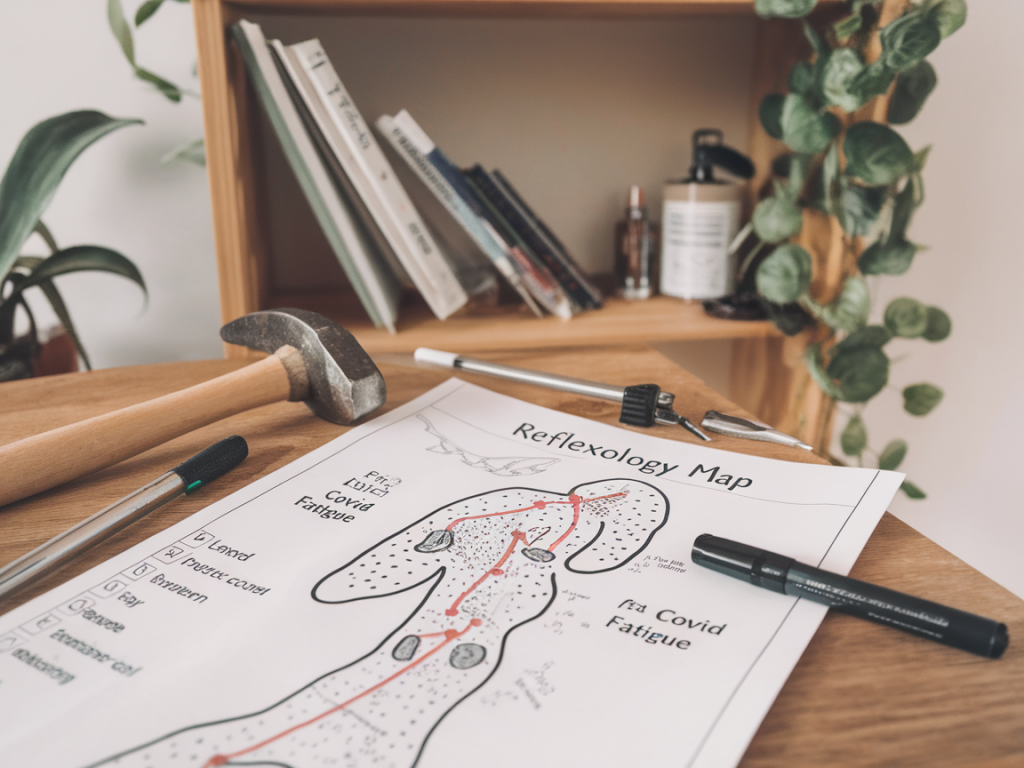
Living with long COVID fatigue means learning to respect a much smaller energy budget. Over the years of working with clients who are rebuilding stamina after viral illness, I've found that reflexology can be a gentle, practical tool to support energy regulation—when it's adapted to the limits of post-viral recovery. Below I share a clear, step-by-step routine, the exact reflex points I use, and a pacing plan you can follow. Everything is written for people who may have severe fatigue and post-exertional symptom exacerbation (PESE), so the priority is gentle, short, repeatable work rather than pushing through.
Why reflexology can help long COVID fatigue
Reflexology is not a cure for long COVID, but it can help with symptoms commonly associated with it: unrefreshing sleep, brain fog, autonomic dysregulation, and low energy. By targeting reflexes that relate to the nervous system, endocrine balance and lymphatic circulation, we aim to:
Safety and precautions
Before you start, please note:
Exact reflex points and how to find them
Below I list the reflex points I commonly use for fatigue and how to locate them on the foot. Work on whichever area feels comfortable; you don’t need to hit all points every time.
| Reflex Point | Location on the foot | Why it helps |
|---|---|---|
| Solar plexus | Centre of the foot, along the transverse arch (just below the ball of the foot). | Promotes relaxation and vagal tone—good for stress and nervous system calm. |
| Adrenal gland | Inner arch, just below the ball of the foot near the plantar arch bulge. | Supports stress-hormone regulation and sustained energy (use very gently). |
| Thyroid | Base of the big toe, on the pad of the toe. | Supports metabolic function and overall energy. |
| Pituitary/hypothalamus | Centre of the big toe pad. | Helps with systemic regulation and hormonal signalling. |
| Diaphragm line | Across the ball of the foot, horizontally under the toe bases. | Supports breathing mechanics and vagal response. |
| Lymphatic/metatarsal area | Just behind the toes across the metatarsal heads and toward the top of the arch. | Encourages drainage and immune system support. |
| Pelvic/colon reflexes | Heel and lower inner heel. | Helps digestion and elimination—important when energy is low. |
Simple technique cues
Use the pads of your thumbs or fingers. The following techniques are gentle and suitable when energy is limited:
Short routine (3–5 minutes) — for very limited energy
This is the minimum effective routine when you feel depleted. It can be repeated multiple times a day if tolerated.
Standard routine (10–15 minutes) — when you have a bit more energy
Use this on better days or when you can rest afterwards.
Restorative session (30–45 minutes) — for recovery days only
Reserve this for days when you plan to rest afterwards. Include longer holds and gentle full-foot stroking.
Pacing plan and frequency
Consistency matters more than intensity. Here’s a safe pacing approach I recommend to clients:
Always monitor for delayed symptom worsening. If you feel drained 12–48 hours after a session, reduce duration and frequency.
Practical tips and small supports
When to seek further help
If reflexology makes symptoms significantly worse, if you have chest pain, severe breathlessness, or new neurological signs, stop and contact medical services. Reflexology is supportive, not a replacement for medical care, and it works best as part of a broader rehabilitation plan coordinated with your healthcare team.
If you want, I can adapt this routine into a printable 1‑page plan for you, or guide you through it in a recorded audio version. Tell me whether you prefer very short micro-sessions or a slightly longer daily practice, and I’ll tailor timings and cues to your energy profile.