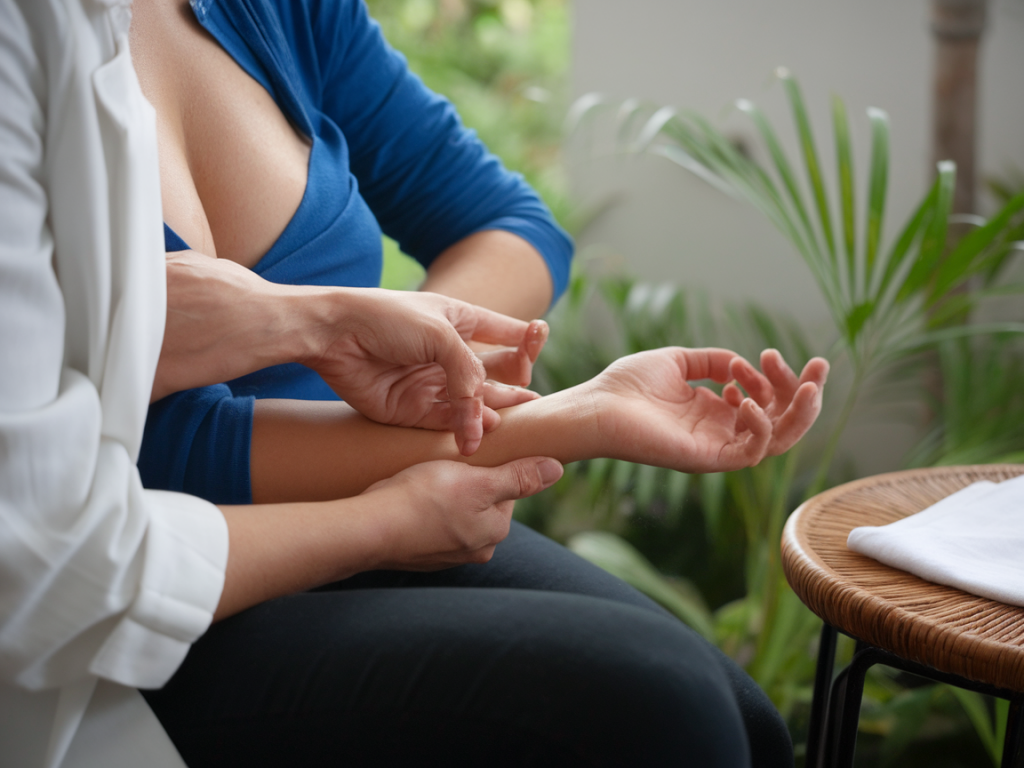
As a reflexologist and wellbeing practitioner working with many new parents, I often meet breastfeeding mums and birthing parents who are exhausted, anxious about supply and in pain from sore or cracked nipples. A short, calm reflexology routine can be a practical tool to help ease nipple pain, support milk supply concerns and reduce the background anxiety that often makes everything feel worse. Below I share a simple 10‑minute reflexology routine you can adapt to your needs — whether you’re in the middle of the night, between feeds, or taking a few moments when baby naps.
Why reflexology can help during breastfeeding
Reflexology won’t replace lactation support or medical care, but it can help in three useful ways:
- Reduce pain and tension: gentle reflex work calms the nervous system and eases muscular tension around the shoulders and neck, which can influence breastfeeding posture and nipple strain.
- Balance stress hormones: reflexology stimulates parasympathetic responses (rest-and-digest), which supports oxytocin release — an important hormone for milk ejection.
- Support circulatory and lymphatic flow: specific foot zones are thought to reflect the breasts and lymph system; improving circulation and lymphatic drainage may help discomfort and congestion.
Safety first — quick checks before you start
Always check these points before using reflexology in the postpartum period:
- If you have mastitis (fever, painful red breast), a blocked duct that’s not clearing, or a suspected breast abscess, see your GP or midwife promptly. Reflexology can be calming but isn’t a substitute for treatment.
- If you had a complicated birth, high blood pressure, a clotting disorder, or any active infection, ask your healthcare provider first.
- Within the first 48–72 hours after birth, be gentle and conservative; wait for the green light from your midwife if uncertain.
- If you’re using medication or herbal galactagogues, mention these to both your GP and reflexologist so protocols are safe.
How to use this 10‑minute reflexology routine
This routine is designed to be repeatable and adaptable. Pick a comfortable seated position, support your foot on a cushion or your opposite thigh, and use a light oil (almond, grapeseed or a scent‑free massage oil) if your skin is dry. I like to use a small dab of bio‑oil or an unscented baby oil for friction. Always work on the feet that feel easier to handle first, and remember: the aim is calm, not force.
Routine — 10 minutes (timings are approximate)
- Minute 0–1: Grounding breath + gentle holds
Sit quietly, place your foot in your hands and take 3 slow, full breaths. Hold the top of the foot with both hands for 20–30 seconds, allowing warmth and presence to settle in. - Minute 1–2: Thumb walking — chest/breast reflex
Use your thumb to “walk” gently across the ball of the foot (the padded area beneath the toes). This area corresponds to the chest and breast reflexes. Keep pressure comfortable — firm but not painful. - Minute 2–3: Solar plexus point
Press gently into the soft depression just below the ball of the foot (the solar plexus reflex). Hold for 6–8 seconds then release. Repeat twice. This calms the nervous system and supports oxytocin regulation. - Minute 3–4: Lung reflex
Slide your thumb along the upper pad towards the toes’ base (the lung reflex area). This area can help with breathing ease and general soothing; breathe slow and long as you work it. - Minute 4–5: Endocrine/hormonal areas
Gently stimulate the centre of the foot arch (adrenal/pituitary reflex approximation). Use light circular motions for 30–40 seconds to support hormonal balance and stress response. - Minute 5–6: Lymphatic sweep
Using open palm or flat fingers, sweep from the toes down toward the ankle in gentle strokes along the top and sides of the foot. This mimics lymphatic movement and can feel gently relieving around the chest area. - Minute 6–7: Heel pad — pelvic/relaxation
Press and release around the heel and lower sole to ground and support pelvic relaxation. This is especially helpful for parents balancing recovery and milk supply. - Minute 7–8: Vagus nerve calming
Very light circular motion across the inner arch (toward the big toe side) can stimulate vagal tone. Keep this gentle and rhythmic — imagine smoothing out a tight knot. - Minute 8–9: Toe work — neck/shoulders
Gently compress and release each toe base; this area reflects the head and neck. It’s useful if you’re holding tension in your shoulders during feeds. - Minute 9–10: Finish with breath and gratitude
Hold the whole foot, breathe in for 4, out for 6, three times. Offer a soft intention: “I am doing my best.” Repeat the routine on the other foot if you have time.
Simple adaptations for common breastfeeding concerns
- Sore/cracked nipples: Combine the chest reflex work with gentle local care: cool compresses between feeds, lanolin (or an all‑butter balm like Purelan 100% lanolin) and checking latch technique with a lactation consultant.
- Low supply worries: Add an extra 1–2 minutes on the pituitary area (centre of the arch) and solar plexus to calm stress. Combine with skin‑to‑skin time and regular pumping/feeding patterns.
- Blocked ducts or engorgement: Reflexology can help the whole‑body relaxation piece, but do targeted breast massage, warm compresses and frequent removal of milk. If symptoms persist or you have fever, seek medical care.
- Nighttime feeds and anxiety: Use the routine seated in dim light to reduce cortisol spikes; the solar plexus and vagal work are particularly helpful for calming in the small hours.
Practical tips to combine with reflexology
- Hydrate well before and after sessions — water supports milk production.
- Pair reflexology with mindful breathing to amplify oxytocin release: exhale longer than inhale.
- Use a comfortable chair and a small footstool to avoid strain during longer sessions.
- Keep a small oil bottle near your nursing area so you can do a 10‑minute routine without hunting for supplies.
- If you’re using a breast pump, short reflex sessions immediately before pumping can help with let‑down for some parents.
| Foot area | Reflex / benefit | Suggested time |
|---|---|---|
| Ball of foot | Breast/chest reflex — pain relief | 1–2 min |
| Solar plexus | Calming, oxytocin support | 1 min |
| Centre arch | Endocrine/hormonal balance | 1 min |
| Inner arch | Vagus tone — relaxation | 1 min |
If you’d like a short printable card of this routine or a guided audio version to play while you work the reflexes, I offer downloadable resources and local group classes through Reflexology Southwest London Co. And if nipple pain or supply concerns are persistent, do reach out to a lactation consultant — reflexology is supportive, but hands‑on feeding assessment and clinical care often make the decisive difference.