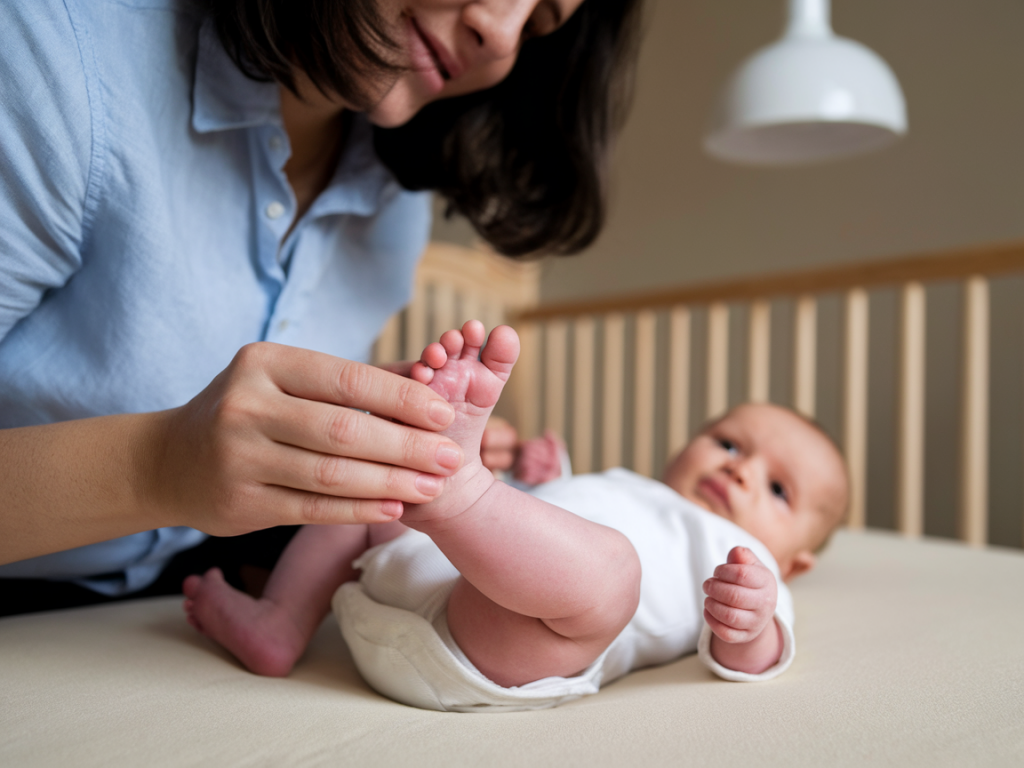
I often work with new parents who feel desperate for anything that will soothe their baby during a colic episode. Over the years I’ve taught a handful of simple reflexology points that parents can use safely at home to offer immediate comfort and to help the nervous system settle. Below I describe five gentle reflex points you can press, how to locate them, how to press safely, and practical tips for using them during the unpredictable world of babies and colic. These techniques are supportive measures — they are not a substitute for medical advice. If your baby is unwell, losing weight, has a fever, or you’re concerned in any way, please seek medical assessment promptly.
Why reflex points can help in a colic episode
Colic is distressing for both baby and parent. Gentle touch, rhythm and focused care can calm the autonomic nervous system and reduce tension in the abdomen. Reflexology for infants focuses on the feet, hands and sometimes the lower leg because these areas are easy to access and respond well to soft pressure. In my practice I pair these reflex techniques with simple calming routines — lowering lights, soft vocal tone and slow breathing — which enhance the effect.
Five reflex points to try and where they are
Below are the five reflex points I find most reliably calming for babies with colic. Each description includes where to find the point, how to press and what to expect.
- Solar Plexus (central reflex) — location: the centre of the foot, just below the ball of the foot, in the soft pad under the toes. This is a key calming point that influences the nervous system and helps with stress-related tension.
- Diaphragm (rib-line reflex) — location: a horizontal band across the ball of the foot, just under the base of the toes. Pressing here can help ease tension that affects digestion and breathing.
- Stomach reflex — location: on the sole, slightly below and to the left on the left foot and slightly below and to the right on the right foot (for babies, gently sweeping the central sole works well). This corresponds to the upper abdominal area.
- Small Intestine/reflex for wind — location: the lower outer edge of the sole (near the heel and outer arch). This area can be helpful for trapped wind and general abdominal discomfort.
- Head/Calming point (big toe) — location: the pad of the big toe and the base of the big toe. Gentle pressure here often brings an immediate sense of relaxation and helps distract from distress.
How to press these points safely
Babies are delicate — the technique must be very gentle and responsive. Here’s a practical, step-by-step way to work each point safely.
- Set the scene: Dim lights, reduce noise, swaddle loosely if that helps, and make sure your hands are warm. If your hands are cold, rub them together or use a little natural oil like Weleda Calendula or Neal’s Yard Remedies Organic Baby Oil — a pea-sized drop is enough.
- Positioning: Hold the baby on your lap, tummy-to-you, or lie them on their back if that’s more calming. For foot work, I often have the baby resting across my lap with their head on my forearm.
- The pressure: Use the pad of your thumb or the soft tip of your finger. Think “firm but gentle” — enough to feel the point under your thumb without causing the baby to flinch. On a pain scale for adults that might be a 3/10; for babies it should feel like a reassuring touch.
- Movement and rhythm: Hold steady pressure for 6–12 seconds, then release for 2–3 seconds, and repeat 2–4 times. You can also use slow circular motions the size of a small pea if the baby prefers movement. Keep the rhythm slow so it feels predictable and calming.
- Observe and adapt: If the baby tenses, cries more, or pulls away, stop and try a lighter touch or switch to the big toe calming point. Reflex work should never be forceful.
Simple sequence you can use right away
Here is a short routine that takes 3–5 minutes and can be done during a crying episode or just before trying to settle the baby for sleep.
- Hold the baby comfortably. Start with a slow, soft hum or sing-song voice to create safety.
- Place your thumb on the solar plexus area of the foot and hold steady pressure for 6–8 seconds. Release and repeat twice.
- Slide to the diaphragm band and use a gentle sweeping motion across the ball of the foot two to three times.
- Work the stomach reflex with small, gentle circles for 6–8 seconds per side of the sole.
- Apply light pressure along the outer sole (the small intestine/wind area) for two repetitions.
- Finish with gentle pressure on the big toe pads for 8–12 seconds to encourage overall calm.
When not to press and safety points
There are important safety caveats to keep in mind:
- Do not press directly on the abdomen — only use reflex points on the feet, hands or lower legs.
- Avoid reflex work if the baby has a known foot injury, infected skin or open wounds.
- If the baby is very unwell, feverish, vomiting persistently, has blood in stools, or you suspect an allergy or other medical issue, stop reflex work and seek urgent medical advice.
- Keep sessions short (3–10 minutes). Babies rarely tolerate longer focused work, and overstimulation can increase crying.
Quick reference table
| Reflex point | Location | How to press | Suggested duration |
|---|---|---|---|
| Solar Plexus | Centre of sole below toes | Thumb pad, steady pressure | 6–12s, repeat 2–3 times |
| Diaphragm band | Horizontal band under base of toes | Gentle sweep or small circles | 2–3 sweeps |
| Stomach reflex | Central upper sole | Small circles, light pressure | 6–8s per side |
| Small intestine/wind | Outer lower sole near heel | Light pressure or strokes | 2–4 repetitions |
| Big toe calming | Pad and base of big toe | Gentle pressure/pinching motion | 8–12s |
Practical tips from my sessions
In sessions I often pair these techniques with a warm baby massage oil, rhythmic rocking and gentle tummy massages if appropriate. I recommend parents practice the routine when the baby is calm so you both become familiar with the touch; that way you can use it quickly during harder moments. If you find a particular point works well, use that as your “go to” for quick relief.
If you’d like hands-on guidance I run short workshops in Southwest London where I teach parents safe reflex techniques and simple self-care routines to use at home — it can make a big difference to confidence when everyone is sleep-deprived and stressed.